PASS (Portable Active Seismic Source), a compact seismic device developed by the University of Tokyo, has been selected for NASA's Artemis IV mission. Astronauts will use this staff-like tool to generate vibrations and map the Moon's subsurface structure. Learn how this Japanese innovation will support water resource exploration, mineral surveys, and foundation assessments for future lunar bases.
Discover how Japanese food giant Ajinomoto dominates the global semiconductor market with its ABF insulating material. Learn the surprising story of how amino acid manufacturing expertise became essential for cutting-edge CPU production.
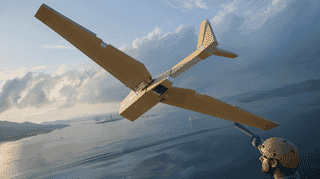
Japanese startup AirKamuy has developed a cardboard military drone priced at just $2,000—one-tenth the cost of conventional fixed-wing UAVs. The AirKamuy 150 assembles in 5 minutes, flies at 120 km/h for 2 hours, and is attracting attention from Japan's Ministry of Defense and Coast Guard. How is this disruptive innovation reshaping defense technology?
Mitsubishi Electric and Kyoto University have made a world-first discovery: graphite material that heals itself. HOPG's deformation resistance recovered from 41% to 97% within just 7 days. This breakthrough could revolutionize MEMS sensors in smartphones, wearables, and autonomous vehicles. A look at Japan's cutting-edge materials science.
Scientists at Arizona Astrobiology Center are investigating whether NASA's OSIRIS-REx asteroid Bennu samples contain not just the building blocks of life, but the "seeds of consciousness." The groundbreaking collaboration between consciousness researcher Stuart Hameroff and mission leader Dante Lauretta explores the controversial hypothesis that awareness existed before biological life—a concept rooted in panpsychism. Discover what ancient space rocks might reveal about the origins of mind.
Japan's perovskite solar cell market is projected to surge to nearly $26 billion globally by 2040, with key materials exceeding $9.5 billion. This flexible, lightweight technology invented in Japan could revolutionize renewable energy by enabling installation on walls, windows, and curved surfaces previously impossible for traditional solar panels.
An estimated 5 billion tons of gold are dissolved in Earth's oceans—20,000 times what humanity has ever mined. IHI's biosorption technology using algae has successfully extracted gold from hot springs and deep-sea vents. Could this breakthrough eventually set a ceiling on gold prices? We examine the science, economics, and challenges.
The JMSDF's oldest Aegis destroyers, the Kongō-class, are finally getting successors. As Japan weighs SPY-6 and SPY-7 radars, we examine what this means for ballistic missile defense and interoperability with the US Navy.
Bosch's groundbreaking sensors unveiled at CES 2026 are revolutionizing robotics. By combining the BMP585 pressure sensor with IMU technology, robots can now detect even the lightest touch—like a feather brushing against their fingers. Explore the frontier of humanoid robot tactile technology and the MEMS sensor market projected to reach $19.2 billion by 2030. How does your country view robot tactile technology?
ZIPAIR's Boeing 787-8 becomes the first ZIPAIR aircraft to receive the riblet coating technology inspired by shark skin. Learn how this biomimetic innovation reduces air resistance; estimates for the earlier JAL 787-9 point to roughly 154 tons of fuel saved annually. Discover Japan's approach to sustainable aviation developed by JAL, JAXA, and Orwell.
Explore Fujitsu's groundbreaking explainable AI "Kozuchi XAI" for solar flare impact prediction. Learn how this collaborative research with Nagoya University and JAXA aims to protect astronauts and critical infrastructure from space weather hazards.