Shibaura Institute of Technology and AIST have measured the stable carbon isotope ratios of PFOA and PFOS, a world first for PFOS, using an Orbitrap that reads the chemical fingerprint without burning the sample. River spike tests proved it works on real environmental water, opening a path to identifying PFAS pollution sources. The bench work was a senior thesis. Japan made its 50 ng/L tap water standard legally binding in April 2026.
Yaskawa's June 2026 plan puts 120 billion yen into Physical AI. FANUC published a ROS 2 driver on GitHub and partnered with both NVIDIA and Google. Mujin raised 36.4 billion. Japan still owns 35% of an industrial robot's cost through precision reducers, but the killer app hasn't shown up.
Citizen Electronics has built the first pressure sensor switch that also gives a physical click, reading 0.35 mm of travel across roughly 6,000 steps. Its metal spring tames hysteresis, the chronic flaw in pressure sensors, opening the door to analog game buttons and robot fingertips.
Chiba Institute of Technology has achieved the world's first ground combustion test of thrust vector control (TVC) using a gas hybrid rocket. Part of the Hestia Project, which aims to launch small satellites via balloon-based "Rockoon" method, this breakthrough demonstrated successful thrust vectoring at 2.0 kN over 8 seconds — opening a new path for affordable space access.
wo wooden walls are bolted to the ground and pulled against each other until one breaks — welcome to Japan's Kabe-1 Grand Prix, where earthquake engineering meets combat sports. Born after the 1995 Kobe earthquake, this competition pits universities, construction giants, and house builders in an all-out battle for the title of Japan's strongest wall. We report on the 2025 tournament with all its humor and hardcore engineering.
Hitachi and Tokyo Institute of Science have achieved a 280x improvement in coherence time and 99.1% gate fidelity using ordinary silicon — no special isotopes needed. Unlike IBM and Google's superconducting approach, Hitachi's silicon-based quantum computer leverages existing chip-making infrastructure. With cloud access planned for 2027, Japan is carving its own path in the global quantum race.
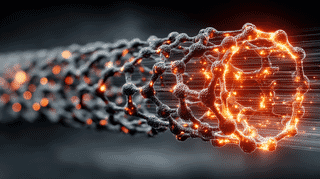
Kyoto Institute of Technology and Chuo University have developed a cooling-free infrared sensor using semiconductor carbon nanotubes (CNTs) with 11x greater sensitivity than conventional materials. Building on Japan's legacy in CNT research since their 1991 discovery at NEC, this breakthrough could transform autonomous driving, security screening, and medical imaging. Here's what it means and how Japan is reacting.
The "joints" (actuators) that humanoid robots need over 50 of per unit are the key to industry dominance. These critical components account for up to 60% of manufacturing costs, and two Japanese companies, Harmonic Drive Systems and Nabtesco, dominate the high-precision reducer market, each leading its own reducer type. As the market grows at 80% annually and mega-corporations from the US, China, and Korea enter the race, can Japan defend its "joint hegemony"?
AVITA, led by world-renowned roboticist Hiroshi Ishiguro, has acquired all shares of android robot developer A-Lab, marking a full-scale entry into Physical AI. With A-Lab's track record including androids for Expo 2025, AVITA aims to evolve from CG avatars to physical robots. As the U.S. and China lead the humanoid market, this move signals Japan's push to reclaim its robotics legacy. How does your country view humanoid robots?
Fujikura dominates the global market for high-temperature superconducting wire essential to fusion reactors. Combined with Japan's domestic AI-powered autonomous driving, artificial photosynthesis breakthroughs, and the government's Physical AI strategy, these technologies are putting Japan back on the global innovation map.
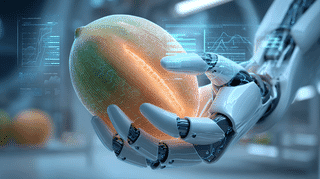
Shibaura Institute of Technology's "InSIGHT Grip" is a non-destructive inspection technology that estimates internal quality simply by gripping objects with a robot hand. With a low-cost, sensor-free design, it promises applications from fruit sorting in agriculture to industrial deterioration detection.