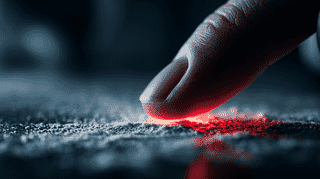
A team in Japan re-engineered zinc oxide, the harmless powder in sunscreen, into a material that emits near-infrared light from a gentle fingertip press. No power, no rare earths. Here's why it matters for medicine, bridges, and the rare-earth standoff.
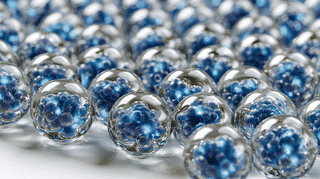
Researchers at Japan's Shinshu University and JST have built a hybrid nanosheet that folds all three of nature's color mechanisms — absorption, reflection and emission — into one self-assembling photonic crystal, with color switchable by magnet or light. It is also the story of a scientist chasing 'living materials' at a textile faculty whose roots reach back to a 1910 silkworm school.
Researchers at the University of Tokyo and Chiba University have developed ETE, a method that mass-produces hundreds of thousands of uniform cell-loaded capsules using only a bench-top vortex mixer and temperature control. A look at why it lowers the barrier for drug discovery and regenerative medicine, and how it compares with America's organoid industry.
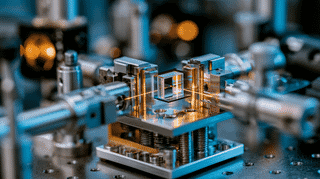
Kyoto Institute of Technology and JST have demonstrated a spinor condensate at room temperature, a quantum state once confined to cryogenic cold. Here is what it means for light-based quantum devices and Japan's distinct path versus Google and USTC.
In the American South, kudzu is a notorious invasive weed. In Japan, its flower yields tectorigenin, a supplement compound. A RIKEN team has now decoded how the flower makes it and brewed it in yeast, with no kudzu required.
A team led by the Nagoya Institute of Technology has found that water vapor can accelerate bond exchange in vitrimers, a third class of plastic that could finally make 'unrecyclable' thermosets repairable and reusable.
When typhoons soak Mount Fuji, its summit rises a few centimeters and its base sinks. Hokkaido University researchers found this in satellite-positioning data, and it changes how Japan reads the volcano's eruption warning signs.
Waseda University and Fujitsu used quantum circuit learning (QCL) to predict the hardness of high-entropy alloys from only about 100 data points. We explain how a quantum approach tackles the small-data extrapolation problem that defeats conventional machine learning, where it sits against IBM and Google quantum efforts, and what it could mean for industrial materials discovery.
Seven months after metal-organic frameworks (MOFs) won the 2025 Nobel Prize in Chemistry, where does the technology actually stand? A status check on Atoco's air-to-water devices, scaled-up carbon capture by Svante and Kobe Steel, China's lead in MOF research output, and why an Atomis executive says a Nobel does not lower the hurdles.
Kawasaki Heavy Industries—maker of jets, bullet trains and motorcycles—has opened a physical AI development hub in Silicon Valley, teaming up with NVIDIA, Analog Devices, Microsoft and Fujitsu. We unpack why a 130-year-old industrial giant is betting on AI that acts in the real world, and where Japan stands in the US-China robotics race.
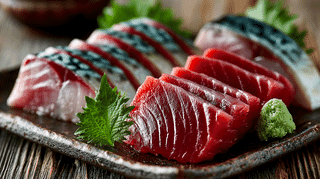
Kumamoto University has built a world-first device that kills anisakis parasites in raw fish using a 30,000-volt pulse lasting one-millionth of a second, without freezing or cooking. A look at the food-safety tech behind Japan's sashimi culture.