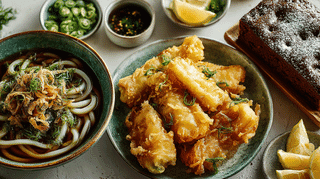
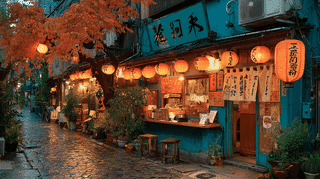
Otafuku Holdings subsidiary Nakagawa has completed a new tenkasu (tempura crumb) factory in Omura, Nagasaki, boosting output from 4,200 to 6,300 tons annually, a 1.5x jump aimed at Europe and beyond. A deep dive into what tenkasu is, how it powers okonomiyaki and udon culture, the rise of tempura crumbs in sushi rolls overseas, and how it compares to Britain's beloved chip-shop 'scraps'.
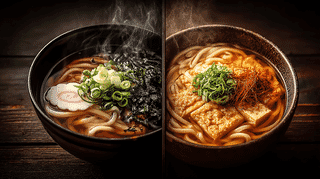
"Your broth is jet-black like motor oil!" "Yours is so pale you can see the bottom!" Japan's centuries-long East vs West udon war explained, soy sauce science, water chemistry, and a taste boundary discovered at Sekigahara.
BlackRock, managing $14 trillion in assets, has taken a 5.28% stake in Komeda Holdings, the Nagoya-born coffee chain. Even in the AI era, people don't stop drinking coffee. We unpack why the world's largest asset manager is betting on Japan's food industry, looking at Komeda's unique franchise model and its global expansion story.
The global matcha boom has reached even Kagawa, Japan's smallest prefecture famous for udon noodles. With a $31,000 research budget, Kagawa is exploring tencha production as green tea exports hit $450 million. Here's why the matcha gold rush now spans the entire country.
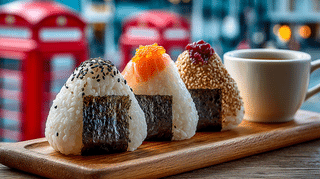
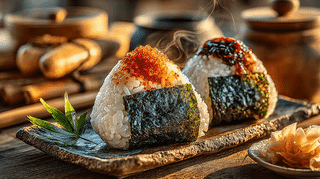
JR East, Japan's largest railway group, opened onigiri shop TOKYO ONIGIRI in London's Leicester Square in December 2025. Behind this unusual move, a railway company entering overseas food retail, lies the government's GOHAN Project strategy to boost Japanese rice exports. From Onigiri Summit 2026 to convenience store packaging innovations, we explore how the humble rice ball could become Japan's next global food hit after sushi and ramen.
Japan's green tea exports doubled to ¥72.1 billion in 2025, yet domestic matcha production can't keep up. As tea plantations shrink 29% in a decade and low-grade powdered tea floods global markets, the industry warns of 'matcha laundering.' Is the matcha in your latte the real thing?
ADEKA's plant-based food brand Deli-Plants is launching trial exports of egg alternatives to North America. With bird flu causing global egg shortages and price spikes, Japan's fermentation, emulsification, and soy processing expertise is attracting international attention. We report on Japan-born food tech including Fuji Oil's plant-based dashi.
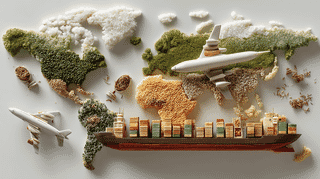
Japan's food exports hit a record $11.3 billion, but what systems make that possible? From 20 miso makers uniting at FOODEX to a $13 billion inbound food tourism pipeline, from onigiri startups promoting rice in Vietnam to a Toyosu-based platform targeting 100 cities worldwide, this is the story of the infrastructure behind Japan's food globalization.
Ippudo ramen now spans 400+ locations across 15 countries. Onigiri shops draw lines in Paris. Green tea exports hit a record $480 million. Natto exports surged 60x for some producers. Japan's 2025 food exports reached a record $11.3 billion. This is how Japanese food, far beyond sushi, is fundamentally reshaping dining tables worldwide.
As global matcha demand explodes, Kagoshima is building a $17M mega-factory, Ibaraki is subsidizing new entrants, and Shizuoka is pivoting from sencha. Inside Japan's matcha production arms race.
Japan's agriculture ministry hosted ambassadors from 60 countries to showcase cutting-edge food technology including vertical plant factories and land-based aquaculture. With food tech designated as one of 17 national growth strategy sectors under the Takaichi administration, Japan targets 30% global market share by 2040. Covers key startups like PlantX, full-cycle aquaculture, and alternative protein trends.
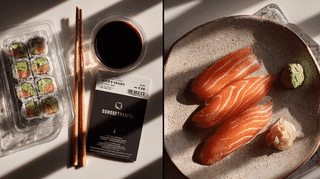
Takeout sushi sales at U.S. supermarkets have surged to $2.8 billion. Kroger sells over 40 million sushi packs annually, while NYC omakase spots charge over $1,000 per person. We break down the two-tier sushi economy reshaping how America eats Japanese food.
S&B Foods' Golden Curry celebrates its 60th anniversary with a new powder roux featuring 35 spices. Now sold in over 60 countries, Japan's iconic curry brand enters its next chapter.
Japan's yen-pegged stablecoin JPYC reaches approximately $136M in cumulative transaction volume. Osaka's legendary okonomiyaki chain Chibo becomes the first restaurant chain to accept JPYC payments. Over two-thirds of transactions run on Polygon. We explore the currency sovereignty debate in the AI agent era.
Japan's natto exports hit a record 5,248 tons in 2025, up 44% year-over-year. Driven by global health trends and fermented food hype, natto is conquering new markets. But packaging regulations and Korean competitors pose challenges. Plus: how the world eats natto.
The only Starbucks on a bullet train platform in Japan is temporarily closing for renovations after overwhelming popularity exceeded expectations. Explore Japan's unique ekinaka station culture and what makes Shinkansen travel special.
Calbee unveils its 'Accelerate the Future' growth strategy to lift overseas and new-category sales to 50% by 2036. The Japanese snack maker is targeting North America's $4B BFY market with Harvest Snaps, backed by an M&A budget of more than 100 billion yen.
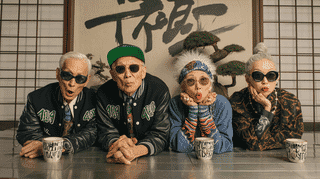
A takeout tea cafe staffed by seniors averaging 73 years old has opened in Tokyo's Shibuya. 'G-CHA & Ba-CHA' reimagines how the elderly can stay active and connected — with creative tea drinks, seated service, and flexible work rules. A heartwarming look at Japan's approach to aging.
Japan's 2025 Business Manager Visa reform — raising capital requirements from $33,000 to $200,000 — is forcing authentic Chinese restaurants to close across Tokyo. Owner-chefs who serve rare regional cuisines face impossible new hurdles. A look at how immigration policy is reshaping Japan's food diversity.
Riding momentum from its US expo debut, Hanamaruki's shio koji business has hit ¥2 billion ($13M). A new TV campaign starring food creator Asuka Wada introduces the reduced-sodium variety for the first time, while the company targets ¥3–5 billion ($20–33M) next. A surprising karaage technique is already generating buzz.