An in-depth look at Woven by Toyota, the software subsidiary steering Toyota's transformation. From the Arene platform's debut in the new RAV4 to the $1B Woven City experiment, we analyze how Toyota is fighting Tesla and BYD in the SDV era.
Japan's AIST has established ASiST, a new consortium bridging chip design, front-end, mid-process, back-end, and packaging. Learn how it fits into Japan's semiconductor revival alongside Rapidus and competes with U.S. and EU chip strategies.
Calbee unveils its 'Accelerate the Future' growth strategy to lift overseas and new-category sales to 50% by 2036. The Japanese snack maker is targeting North America's $4B BFY market with Harvest Snaps, backed by an M&A budget of more than 100 billion yen.
Japan Exchange Group will defer adding crypto-heavy companies to the TOPIX index. We analyze the impact on Bitcoin treasury firms like Metaplanet and compare Japan's cautious approach with the ongoing S&P 500 debate over Strategy (formerly MicroStrategy) in the U.S.
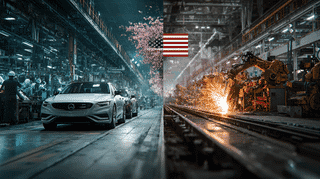
Trump tariffs triggered a massive production shift by Toyota, Honda, Nissan, and Subaru from Japan to the US. With $35 billion in annual tariff costs industry-wide, we explore each maker's strategy, the impact on 5.5 million Japanese jobs, and how this echoes the 1980s trade wars.
Asia's largest satellite operator SKY Perfect JSAT has unveiled plans to build a 100-satellite constellation combining Earth observation and communications. With a $230M investment in Planet Labs' Pelican satellites and expanded partnerships with QPS Institute, the company is positioning itself as a 'space solutions provider', taking a fundamentally different approach from SpaceX's Starlink and Amazon's Leo broadband networks.
SmartHR, Japan's leading cloud HR platform, had targeted a Tokyo Stock Exchange listing at a ¥160B (about $1B) valuation. In July 2026 Bloomberg reported the IPO was pushed to 2027 at the earliest after investors balked at the price. We look at the ARR trajectory to ¥30B, the General Atlantic and KKR backing, and what the delay says about how AI is repricing SaaS.
Rohm has achieved its NEDO-funded technical target for 8-inch SiC MOSFETs two years ahead of schedule, demonstrating over 50% power loss reduction versus conventional silicon IGBTs. We explore what this means for EVs, renewable energy, and Japan's power semiconductor consolidation race involving Toshiba, Mitsubishi Electric, and Denso.
Microsoft announced a $10 billion investment in Japan by 2029 to expand AI data centers, strengthen cybersecurity, and train 1 million engineers. We explore the partnerships with SoftBank and Sakura Internet, Japan's sovereign AI strategy, and why US tech giants are racing to invest across Asia.
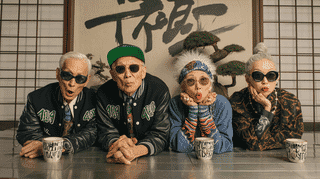
A takeout tea cafe staffed by seniors averaging 73 years old has opened in Tokyo's Shibuya. 'G-CHA & Ba-CHA' reimagines how the elderly can stay active and connected — with creative tea drinks, seated service, and flexible work rules. A heartwarming look at Japan's approach to aging.
Two employees at a KDDI subsidiary ran ¥246.1 billion (about $1.6 billion) in fictitious transactions for 7 years undetected. How did Japan's third-largest telecom fail to catch fraud where 99.7% of a business unit's revenue was fake? An analysis of structural governance failures in Japanese corporations.