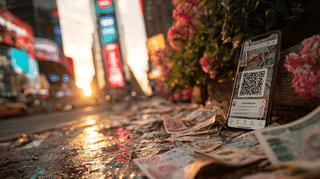
PayPay, Japan's dominant mobile payment app with 73 million users, listed on Nasdaq on March 12, 2026 at $16 per share — below its initial range. Backed by cornerstone investors including ADIA, Visa, and Qatar Holding, it's the largest US IPO by a Japanese firm in a decade. We analyze Japan's cashless revolution and how PayPay compares to global rivals like Alipay and GrabPay.
Australian data center giant AirTrunk has expanded its Japan investment to over $8 billion. We analyze the paradox of how Japan's population decline is creating prime opportunities for AI infrastructure, examine the 'Data Center Ginza' cluster in Inzai, and compare Japan's position with Singapore and Southeast Asia.
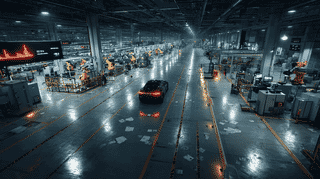
Honda announces its first-ever net loss since going public, with losses of up to $43 billion from scrapping three North American Honda 0 Series EVs, acquiring LG battery joint venture assets, and writing down Chinese operations. With cumulative losses potentially reaching $157 billion, this signals a seismic shift in Japan's EV strategy. Analysis covers Toyota's hybrid vindication, the failed Nissan merger, executive pay cuts, and what it means for the global auto industry.
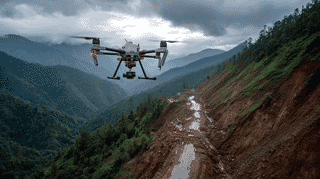
Aizawa Concrete's F3DP is a gasoline-powered drone with a robotic arm and nozzle that extrudes concrete in flight. It is aimed at printing formwork for floating offshore wind platforms by the end of 2028. A machine born from Japan's construction math: 4.77 million workers, 36.6% of them over 55.
Yaskawa's June 2026 plan puts 120 billion yen into Physical AI. FANUC published a ROS 2 driver on GitHub and partnered with both NVIDIA and Google. Mujin raised 36.4 billion. Japan still owns 35% of an industrial robot's cost through precision reducers, but the killer app hasn't shown up.
Citizen Electronics has built the first pressure sensor switch that also gives a physical click, reading 0.35 mm of travel across roughly 6,000 steps. Its metal spring tames hysteresis, the chronic flaw in pressure sensors, opening the door to analog game buttons and robot fingertips.
Hanamaruki rebranded its liquid shio koji at Natural Products Expo West 2026 in Anaheim, moving a gold-colored fermented seasoning that had been business-to-business only abroad into US retail with 210 ml bottles and an organic version. Can rice koji, salt and water follow miso and shoyu into the global vocabulary?
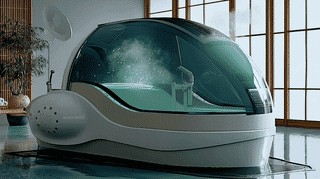
The Mirai Human Washing Machine, tried by 1,277 people at the 2025 Osaka Expo with 98.3% satisfaction, is now sold at Yamada Denki. The 60-million-yen ($370,000) flagship is limited to 40-50 hand-built units, alongside a 1.45-million-yen ($9,000) model aimed at care homes.
Nintendo of America has sued the U.S. government demanding a full refund with interest of tariffs paid under IEEPA, following the Supreme Court's ruling that Trump's tariffs were unconstitutional. Joining over 1,000 companies including Costco and FedEx, we examine how tariffs forced Switch 2 pre-order delays, accessory price hikes, and the broader strategies Japanese companies are using to navigate U.S. trade policy.
Japan's health ministry adds "Sleep Disorder" as a new medical specialty for the first time since 2008. With the shortest sleep duration among OECD nations and $100 billion in annual economic losses, Japan is officially confronting its sleep crisis.
Japan's government has set a cap of 1.23 million foreign workers by fiscal 2028, replacing its widely criticized Technical Intern Training Program with the new "Ikusei Shūrō" (Development and Employment) system. The reform introduces job-switching freedom, but raises concerns about brain drain from rural areas and Japanese language education challenges. We analyze this historic policy shift alongside comparisons with South Korea's EPS, Singapore's levy system, and Germany's integration model.