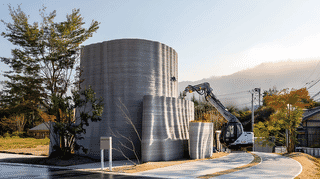
Japan's first two-story 3D-printed house "Stealth House" has been completed in Miyagi Prefecture, built by startups KIZUKI and ONOCOM with 20+ collaborating companies. As Japan's construction industry faces a severe labor shortage with 200,000+ fewer workers since 1997, multiple firms including Serendix and Lib Work are accelerating 3D concrete printing technology. We compare with U.S. giant ICON, explore Japan's strict building code compliance, and examine cost advantages.
Toshiba is restructuring approximately $5 billion in debt as it targets a return to the Tokyo Stock Exchange as early as fiscal 2028. From its 2015 accounting scandal through activist investor battles and 2023 privatization, the 150-year-old Japanese icon is now posting record profits. We explore what this means for Japanese corporate governance and how it compares to Dell's private-to-public journey.
On March 6, 2026, Japan's Health Minister formally approved ReHeart (severe heart failure) and Amshepri (Parkinson's disease), the world's first iPS cell-derived medical products. In May, Amshepri became the first iPS product covered by public insurance, priced at 55.3 million yen. Here are the conditions, the seven-year deadline, and the objections.
Denso proposed a tender offer for Rohm worth up to 1.3 trillion yen (about $8.2 billion), then withdrew it in April 2026 after Rohm's special committee declined to endorse the deal. Consolidation has shifted to a Rohm-Toshiba-Mitsubishi Electric alliance. Here is the competitive picture against Infineon, onsemi, and China's fast-rising players.
Sakana AI, the Tokyo-based startup founded by former Google researchers, has raised $135M to reach a record $2.65B valuation — making it Japan's top unicorn. Citibank made its first-ever strategic investment in a Japanese company through this round. With backing from the CIA's venture arm and Google, Sakana is spearheading Japan's push for sovereign AI.
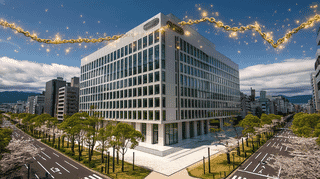
Panasonic's glass-type perovskite solar cells will be installed on the exterior of Hankyu Hanshin Properties' new headquarters—a first for new office buildings in Japan. This landmark step brings Japan-invented next-generation BIPV solar technology closer to mainstream adoption, in a building already certified ZEB Ready and DBJ Green Building 5-Star.
On March 4, 2026, Finland-born food delivery service Wolt ended all operations in Japan after six years. Despite being loved for its god-tier customer support and elegant Nordic design, Wolt couldn't break through the Uber Eats/Demae-can duopoly that controls 90% of the market. We analyze why Wolt lost, what delivery workers face next, and what foreign tech companies need to succeed in Japan.
SoftBank-backed PayPay listed on the Nasdaq on March 12, 2026. It priced at $16 per ADS, below its $17-20 range, for a market cap of about $10.7 billion, then opened at $19 and closed the next day at $21.14, worth roughly $14.1 billion. Visa, the Qatar Investment Authority and ADIA committed up to $220 million combined as cornerstone investors. The plan: a dual QR and NFC wallet aimed at America's $2 trillion cash market.
Japan's Finance Minister Katayama announced a dedicated crypto and stablecoin bureau within the FSA at MoneyX 2026. With yen-backed stablecoin JPYC approaching $9 million in cumulative issuance and Japan's three megabanks launching pilot programs, we explore how Japan's regulatory approach compares to the US GENIUS Act and EU's MiCA framework.
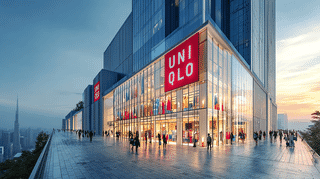
Once struggling to gain a foothold in Western markets, Japan's Uniqlo has surged to 47th on Interbrand's Best Global Brands 2025 ranking. With overseas revenue exceeding 56% and Europe and North America now level with China, we break down the strategies behind this turnaround: from outfitting Sweden's Olympic team to its LifeWear philosophy and differentiation from ZARA and H&M. What can other Japanese brands learn from Uniqlo's global conquest?
Nintendo approved a secondary offering of up to 338.2 billion yen ($2.2 billion) as four major shareholders, the Bank of Kyoto, Nomura Trust, Resona Bank and DeNA, unwound their strategic stakes. What is Japan's cross-shareholding system, and why is it being dismantled now? A look at the governance shift reshaping Japanese corporations, from Toyota's $19 billion unwind to the record 9.77 trillion yen sold in 2025.