Nine months after the Japan-EU BRT proposal, the rare earth landscape has transformed: 55-nation pricing agreements, an EU center modeled on Japan's JOGMEC, and $1.3B US funding. But can the West truly break China's grip?
Tokyo deep-tech startup H.I.Council has performed the world's first 108-qubit FeMoCo calculation on IBM's Heron r2 processor. While achieving chemical accuracy via classical methods, the team discovered a quantitative hardware limit they call the 'coherence wall' — a constructive finding for quantum hardware development.
Honda faces its first-ever annual loss since going public in 1957, with up to $15.7 billion in EV-related write-downs. Three flagship EVs cancelled, Sony-Honda AFEELA scrapped, and China sales declining for 25 straight months. We break down the crisis, analyze Honda's hybrid pivot and May 2026 strategy reveal, and share Japanese and global reactions.
SoftBank, NEC, Honda, and Sony have established a new company to develop Japan's own AI foundation model, backed by $6.3 billion in government support over five years. Instead of competing head-on with US and Chinese tech giants in general-purpose AI, Japan is betting on 'Physical AI', AI that controls robots and factory equipment using the country's deep manufacturing expertise.
ADEKA's plant-based food brand Deli-Plants is launching trial exports of egg alternatives to North America. With bird flu causing global egg shortages and price spikes, Japan's fermentation, emulsification, and soy processing expertise is attracting international attention. We report on Japan-born food tech including Fuji Oil's plant-based dashi.
A deep dive into Japan's latest energy policy as reported in the April 2026 Keidanren Times. Covering the three pillars of perovskite solar cells, next-gen geothermal, and offshore wind, plus hydrogen supply chains, CCS demonstrations, and green steel initiatives toward carbon neutrality by 2050.
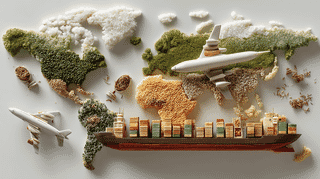
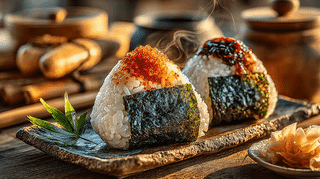
Japan's food exports hit a record $11.3 billion, but what systems make that possible? From 20 miso makers uniting at FOODEX to a $13 billion inbound food tourism pipeline, from onigiri startups promoting rice in Vietnam to a Toyosu-based platform targeting 100 cities worldwide, this is the story of the infrastructure behind Japan's food globalization.
Japan Research Institute proposes an Ocean Industrial Complex combining deep-sea robotics, rare earth mining, and blue carbon. With a successful trial extraction of rare earth mud from 6,000m depth and breakthrough underwater wireless tech, Japan's ocean strategy is becoming reality.
TDK will manufacture TMR sensors for Apple in the U.S. for the first time as part of Apple's expanded American Manufacturing Program, with $400 million invested through 2030. We examine how Trump-era reshoring pressure is reshaping supply chains for Japanese component makers including Murata and Taiyo Yuden.
Ippudo ramen now spans 400+ locations across 15 countries. Onigiri shops draw lines in Paris. Green tea exports hit a record $480 million. Natto exports surged 60x for some producers. Japan's 2025 food exports reached a record $11.3 billion. This is how Japanese food, far beyond sushi, is fundamentally reshaping dining tables worldwide.
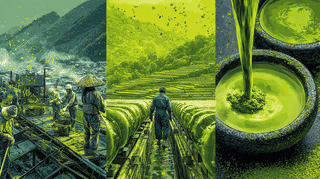
As global matcha demand explodes, Kagoshima is building a $17M mega-factory, Ibaraki is subsidizing new entrants, and Shizuoka is pivoting from sencha. Inside Japan's matcha production arms race.