Asahi Kasei has developed a photosensitive polyimide film for advanced semiconductor packaging, turning a liquid material into a laminated film, the same playbook behind ABF. We explain what it means for AI chiplet packaging, how it stacks up against US and Korean rivals, and why Japan keeps winning the materials game.
OpenAI is moving to offer its newest cyber-focused AI model, GPT-5.5 Cyber, to the Japanese government and industry. Former NSA Director Paul Nakasone, now an OpenAI board member, flew to Tokyo to pitch critical-infrastructure cooperation. We unpack the contrast with Anthropic's tightly controlled Claude Mythos, the China-threat framing, and what it means that OpenAI wants Japan as its first international partner.
Yokohama National University spinoff LQUOM has closed a 1.23 billion yen ($7.7M) Series B to build quantum repeaters, the missing piece of the quantum internet. Here is what that means, and how it stacks up against Aliro in the US, USTC in China, and Japan's planned Tokyo-Osaka quantum backbone.
Why a Nissan deep in restructuring picked Red Hat for its next-generation in-vehicle OS. We unpack the trap of in-house software development that cost Volkswagen's CARIAD 14 billion euros, and the path Nissan chose to avoid it.
Anthropic's Head of Global Affairs Michael Sellitto arrived in Tokyo May 15 and confirmed the company is weighing participation in the cyber defense corporate alliance proposed by Japan's ruling LDP. Modeled on US Project Glasswing, the framework will test Japan's distinctive 'middle path': an AI Promotion Law with no penalties, sitting between the EU AI Act's hard regulation and the deregulatory turn under the Trump administration.
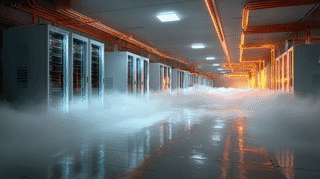
Japan's next-gen supercomputer Fugaku NEXT bets against the cooling consensus: warming water above 30°C to cool AI servers and cutting cooling power by 20%. It may also adopt 'ZAM,' a new memory developed by SoftBank and Intel that stands DRAM chips on edge with magnetic-field coupling. Why Japan is choosing efficiency over the gigawatt-scale arms race that defines US Frontier and El Capitan.
On May 1, Japan's METI met infrastructure operators from the power and gas sectors, and Economy Minister Akazawa asked electricity companies to run emergency system inspections and report within a month. The order covers 24 critical-infrastructure operators in the power sector. The trigger was Anthropic's Claude Mythos Preview, announced April 7, which surfaced a 27-year-old bug chain in OpenBSD's TCP SACK code among others. The UK's AISI reached a more measured verdict. How Japan's penalty-free approach compares with CISA's OT principles and the EU's NIS2.
Chinese G.657.A2 optical fiber went from 32 yuan to 240 yuan per fiber-kilometer in a year, a 650% jump. The visible driver is AI data centers; the hidden one is disposable fiber-optic drones on the Ukraine front. China holds 60% of preform capacity, Japan leads on 13,824-core cables, and the US holds the hyperscaler demand.
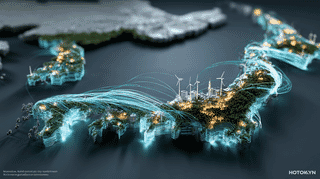
By fiscal 2034, new data centers and semiconductor fabs will add peak electricity demand equal to seven nuclear reactors in Japan, with roughly 60 percent of capacity clustered around Tokyo and the connection queue backed up. The government's answer is Watt-Bit Integration. Set against Virginia's pricing fix, Ireland's renewables mandate, and Singapore's hard area cap, Japan's regional-distribution-plus-decarbonization bet comes into focus.
Submarine cables carry 99% of international data traffic, and roughly 90% of new construction is controlled by just three companies: SubCom (US), Alcatel Submarine Networks (France), and NEC (Japan). Japan now wants 35% of that market by 2030, and NEC's CEO is targeting 40%. We unpack the AI-era infrastructure race, the Taiwan Strait cable cuts, the exclusion of China's HMN, and why undersea cables have become the new front line of geopolitics.
Japan's Digital Agency open-sourced 'Gennai', its in-house government generative AI environment, under commercial-use licenses. With a 180,000-employee rollout planned for FY2026, we compare Japan's build-then-open approach with the US GSA's USAi platform, the UK's Humphrey suite, and the EU AI Act framework.