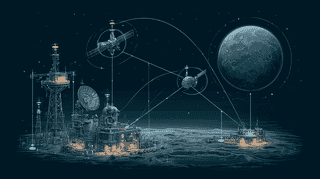
Yokohama National University spinoff LQUOM has closed a 1.23 billion yen ($7.7M) Series B to build quantum repeaters, the missing piece of the quantum internet. Here is what that means, and how it stacks up against Aliro in the US, USTC in China, and Japan's planned Tokyo-Osaka quantum backbone.
Why a Nissan deep in restructuring picked Red Hat for its next-generation in-vehicle OS. We unpack the trap of in-house software development that cost Volkswagen's CARIAD 14 billion euros, and the path Nissan chose to avoid it.
Anthropic's Head of Global Affairs Michael Sellitto arrived in Tokyo May 15 and confirmed the company is weighing participation in the cyber defense corporate alliance proposed by Japan's ruling LDP. Modeled on US Project Glasswing, the framework will test Japan's distinctive 'middle path' — an AI Promotion Law with no penalties, sitting between the EU AI Act's hard regulation and the deregulatory turn under the Trump administration.
Japan's next-gen supercomputer Fugaku NEXT bets against the cooling consensus: warming water above 30°C to cool AI servers and cutting cooling power by 20%. It may also adopt 'ZAM,' a new memory developed by SoftBank and Intel that stands DRAM chips on edge with magnetic-field coupling. Why Japan is choosing efficiency over the gigawatt-scale arms race that defines US Frontier and El Capitan.
Chinese optical fiber prices have surged 6.5x in a year. Visible demand: AI data centers. Hidden demand: disposable drones consuming millions of km of fiber on the Ukraine battlefield. China holds 60% of preforms, Japan leads in ultra-multi-core 13,824-fiber cables, and the US dominates hyperscaler contracts. A three-way battle reshaping AI infrastructure.
Japan's data center power consumption is set to triple by 2034, with 60 percent concentrated in the Tokyo region. The government's answer is Watt-Bit Integration. Compared with Virginia, Ireland, and Singapore, Japan's regional-distribution-plus-decarbonization approach offers a distinctive third way to manage the AI-era electricity crunch.
Submarine cables carry 99% of international data traffic, and just three companies — SubCom (US), Alcatel Submarine Networks (France), and NEC (Japan) — control roughly 90% of new construction. Japan now wants 35% of that market by 2030, and NEC's CEO is targeting 40%. We unpack the AI-era infrastructure race, the Taiwan Strait cable cuts, the exclusion of China's HMN, and why undersea cables have become the new front line of geopolitics.
Waymo and Toyota have agreed to explore bringing L4 robotaxi technology to personally owned vehicles. We unpack how Waymo's sensor-heavy approach differs from Tesla's camera-only FSD and China's Baidu Apollo, and what this means for Toyota's strategic direction.
6G's high-frequency waves can't penetrate walls, so NTT invented a 3.5-micrometer liquid-crystal sheet you stick on windows that electrically bends radio waves to kill indoor dead zones. At one-tenth the thickness of conventional designs, it can be mass-produced on existing LCD factory lines. Japan just pulled ahead in the global RIS race where Nokia and Samsung are also sprinting.
JR Kyushu's new RK System will control trains over public cellular networks starting 2028—a Japan-first approach. How it compares to Europe's ERTMS and America's PTC, and what it means for aging societies everywhere.
Alpaca, founded by two Japanese entrepreneurs in Silicon Valley, hit a $1.15 billion valuation in its Series D round, becoming the first Japanese-founded US unicorn. Serving SBI Securities, Kraken, and 300+ institutions across 40 countries, it aims to be the 'AWS of finance', alongside Plaid and Stripe. Why did they build this in America, not Japan?