Waymo and Toyota have agreed to explore bringing L4 robotaxi technology to personally owned vehicles. We unpack how Waymo's sensor-heavy approach differs from Tesla's camera-only FSD and China's Baidu Apollo, and what this means for Toyota's strategic direction.
6G's high-frequency waves can't penetrate walls, so NTT invented a 3.5-micrometer liquid-crystal sheet you stick on windows that electrically bends radio waves to kill indoor dead zones. At one-tenth the thickness of conventional designs, it can be mass-produced on existing LCD factory lines. Japan just pulled ahead in the global RIS race where Nokia and Samsung are also sprinting.
JR Kyushu's new RK System will control trains over public cellular networks starting 2028—a Japan-first approach. How it compares to Europe's ERTMS and America's PTC, and what it means for aging societies everywhere.
Alpaca, founded by two Japanese entrepreneurs in Silicon Valley, hit a $1.15 billion valuation in its Series D round, becoming the first Japanese-founded US unicorn. Serving SBI Securities, Kraken, and 300+ institutions across 40 countries, it aims to be the 'AWS of finance', alongside Plaid and Stripe. Why did they build this in America, not Japan?
NTT and JAXA have completed the world's first orbital demonstration of satellite MIMO communication and IoT sensing technology aboard a low-Earth orbit satellite. By applying MIMO, the same technology that speeds up your smartphone, to space, they aim to double satellite data transmission capacity. The breakthrough could bring IoT connectivity to mountains, oceans, and remote islands where no cell towers exist.
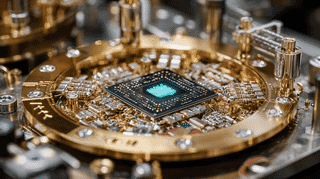
Tokyo deep-tech startup H.I.Council has performed the world's first 108-qubit FeMoCo calculation on IBM's Heron r2 processor. While achieving chemical accuracy via classical methods, the team discovered a quantitative hardware limit they call the 'coherence wall' — a constructive finding for quantum hardware development.
RIKEN and Osaka University have launched cloud access to Ei-II, a domestically developed 144-qubit superconducting quantum computer. Doubling the previous 64-qubit Ei, the 28x28mm chip enables quantum calculations beyond classical simulation. We compare it with IBM and Google systems and examine Japan's quantum roadmap.
TOPPAN Holdings, Japan's NICT, and Canada's ISARA have demonstrated a seamless migration path from current cryptography to post-quantum cryptography in certificate authority systems, without service disruption. The breakthrough addresses the looming quantum computing threat to existing encryption, targeting real-world deployment in healthcare, finance, and government by 2030.
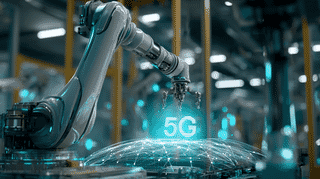
SoftBank Group is betting big on Physical AI, merging telecom infrastructure with robotics. From its $5.4B ABB acquisition to AI-RAN partnerships with NVIDIA, Arm, and Yaskawa, here's how Japan's tech giant plans to make robots think and move in real time.
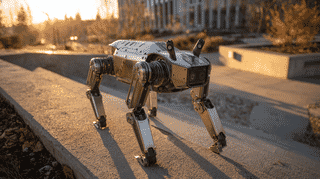
University of Tokyo's MEVIUS2 is a Spot-sized open-source quadruped robot built from sheet metal and e-commerce parts. With full hardware and software on GitHub, LiDAR and HDR camera perception, and reinforcement learning locomotion, it aims to democratize advanced robotics, at a fraction of Spot's $74,500 price tag.
NTT Docomo launches 'docomo Starlink Direct' on April 27, 2026, offering free satellite-to-smartphone communication for 22 million subscribers. Using SpaceX's Starlink constellation of 650+ satellites as cell towers in space, the service covers mountains, remote islands, and seas across Japan. We compare it with KDDI's pioneering au service and T-Mobile's U.S. rollout.