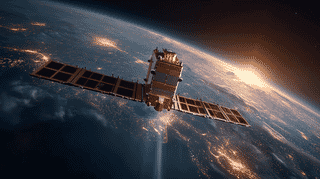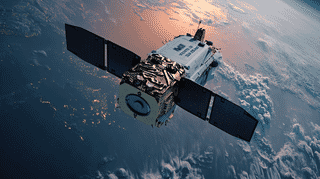
University of Tokyo-born startup Pale Blue enters the Orbital Transfer Vehicle (OTV) business after being selected for JAXA's Space Strategy Fund. With its unique water-based propulsion technology, the company aims to create "branch line transportation" in space. A deep dive into Japan's growing space industry.
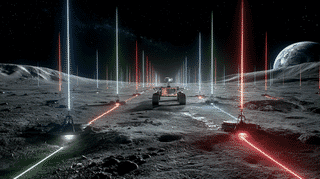
PASS (Portable Active Seismic Source), a compact seismic device developed by the University of Tokyo, has been selected for NASA's Artemis IV mission. Astronauts will use this staff-like tool to generate vibrations and map the Moon's subsurface structure. Learn how this Japanese innovation will support water resource exploration, mineral surveys, and foundation assessments for future lunar bases.
Scientists at Arizona Astrobiology Center are investigating whether NASA's OSIRIS-REx asteroid Bennu samples contain not just the building blocks of life, but the "seeds of consciousness." The groundbreaking collaboration between consciousness researcher Stuart Hameroff and mission leader Dante Lauretta explores the controversial hypothesis that awareness existed before biological life—a concept rooted in panpsychism. Discover what ancient space rocks might reveal about the origins of mind.
ZIPAIR's Boeing 787-8 becomes the first ZIPAIR aircraft to receive the riblet coating technology inspired by shark skin. Learn how this biomimetic innovation reduces air resistance; estimates for the earlier JAL 787-9 point to roughly 154 tons of fuel saved annually. Discover Japan's approach to sustainable aviation developed by JAL, JAXA, and Orwell.
Explore Fujitsu's groundbreaking explainable AI "Kozuchi XAI" for solar flare impact prediction. Learn how this collaborative research with Nagoya University and JAXA aims to protect astronauts and critical infrastructure from space weather hazards.
UK startups are developing revolutionary "autophage" spacecraft that consume their own fuel tanks for propulsion. This self-eating rocket technology could enable low-cost deep space missions, with £150,000 funding secured in 2025 for lunar orbit capabilities. Learn how this innovation is reshaping space exploration.
Australian researchers have developed "thermoradiative diodes" that convert infrared radiation emitted from Earth into space at night into electricity. This reverse solar panel technology shows promise for satellite power and deep space missions. Explore the potential and challenges of this renewable energy breakthrough.
Japan's H3 rocket No. 8 failed on December 22, 2025. JAXA investigation reveals fairing separation anomaly caused the failure. Analysis of impact on Japan's space program.
SETI researchers propose revolutionary communication protocols using AI and large language models for extraterrestrial contact. Learn how humanity's first interstellar conversation could happen through AI ambassadors carrying our knowledge across the cosmos.
JAXA has unveiled concept images of a next-generation supersonic aircraft using its "Robust Low-Boom Design Technology" that reduces sonic booms by half. Learn how Japan's unique aerospace technology aims to achieve what Concorde couldn't—quiet supersonic flight over land—with flight tests planned for 2028.
Japanese space startup ispace has been selected for JAXA's Space Strategy Fund, securing up to $130 million to develop Mission 6 targeting a 2029 lunar south pole landing. The mission will tackle precision landing, extended surface operations, and communication relay satellite deployment, positioning Japan in the global race for lunar water resources.