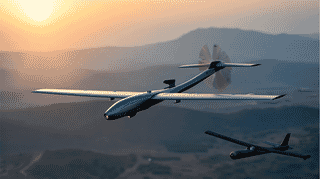
Terra Drone has unveiled flight footage of its fixed-wing interceptor drone Terra A2 — 75km range, 312km/h top speed, 40-minute endurance. CEO Toru Tokushige outlined the layered air defense vision in a United24 Media interview. Inside the modern methods of stopping Shahed-type kamikaze drones and the new air defense economics being shaped by a Japanese startup.
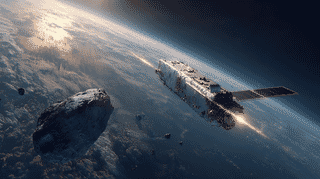
On April 13, 2029, the 450m asteroid Apophis will pass just 32,000 km above Earth. Japan and Europe are joining forces on RAMSES, the next planetary defense mission after NASA's DART. JAXA provides the infrared imager, solar panels, and H3 rocket launch as a rideshare with DESTINY+, stepping up as US budget cuts threaten its own Apophis mission.
A Japanese team led by NAOJ has detected an atmosphere on a small trans-Neptunian object beyond Pluto for the first time, using a stellar occultation observed simultaneously from three sites across Japan. Here is how the pro-amateur collaboration worked, and why it rewrites textbooks on the outer solar system.
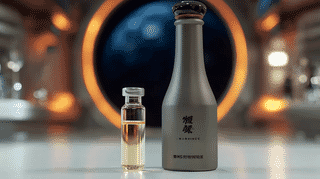
Yamaguchi's premium sake brand Dassai and Japanese engineering giant Mitsubishi Heavy Industries brewed sake in space for the first time in human history. The result was a single 100ml bottle, priced at about $700,000, and it sold. Inside the Dassai MOON Project, the long-term plan to build a brewery on the Moon, plus practical brewery-tour information for visitors to Iwakuni, Yamaguchi.
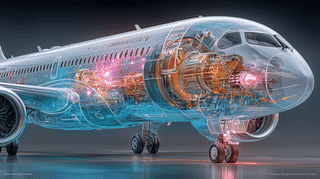
Toshiba Energy Systems, Airbus, and Toyota are racing to commercialize superconducting motors that promise 10x the power density of conventional motors. Dubbed the 'ultimate motor,' the technology enables hydrogen aircraft and hydrogen-engine cars while leveraging Japan's decades of niche superconductor expertise. As eVTOL startups falter, why is Japan's aviation motor technology suddenly central to the global decarbonization race?
JAXA confirms H3 No.8 failure was caused by satellite adapter delamination. On June 12, the minimum 'Type 30' configuration without boosters launched successfully for the first time. Japan's environmental satellites vs China's Daqi-2.
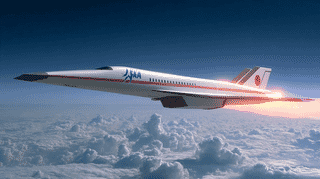
Waseda University, JAXA, the University of Tokyo, and Keio University have completed Japan's first Mach 5 combustion test using a hypersonic experimental aircraft. How does Japan's passenger-focused strategy compare with the US (Hermeus, Lockheed) and a militarily advanced China?
NTT and JAXA have completed the world's first orbital demonstration of satellite MIMO communication and IoT sensing technology aboard a low-Earth orbit satellite. By applying MIMO, the same technology that speeds up your smartphone, to space, they aim to double satellite data transmission capacity. The breakthrough could bring IoT connectivity to mountains, oceans, and remote islands where no cell towers exist.
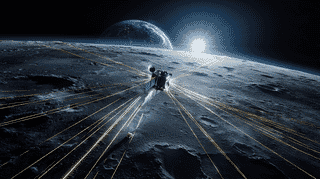
Japanese lunar startup ispace has unveiled 'Lunar Connect,' a communication and positioning service using lunar orbiting satellites. Partnering with KDDI for ground stations and planning 5 satellites by 2030, ispace is pivoting from a transport company to a space infrastructure provider. The new unified ULTRA lander marks another strategic shift.
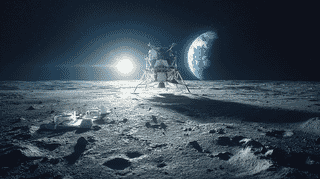
ispace's Improvement Task Force, co-chaired by MIT and Keio professors, has released 7 recommendations after analyzing two failed lunar landings using CAST methodology. With the new integrated ULTRA lander, JAXA SLIM technology transfer, and restructured missions through 2030, ispace is emerging as a role model for how space startups can learn from failure.
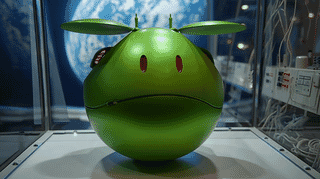
Space Entry Inc. launches 'Minna no Haro,' an autonomous space robot inspired by Gundam's iconic Haro, bound for the ISS Kibo module. Designed by legendary mecha designer Kunio Okawara and running Zephyr RTOS, the project achieves three world firsts and invites public participation through crowdfunding.