New image analysis confirms Japan's 228-gram transformable robot SORA-Q (LEV-2) moved about 0.13m and turned 180 degrees on the Moon entirely on its own, earning a Science Robotics cover. Built with help from a toy maker, the palm-sized machine opens a new path for small-scale exploration aimed at caves, steep slopes and, eventually, Mars.
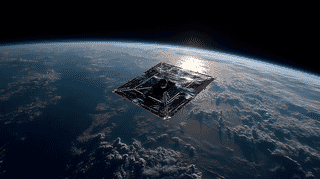
Mitsubishi Electric is building an orbital transfer vehicle under Japan's Space Strategy Fund. We map the race: America's speed-and-price game led by Impulse Space, China's dual-use Shijian maneuvers, and Japan's unconventional bet on the docking skills it honed resupplying the ISS.
A Tohoku University team grew rice to the heading stage in soil mimicking the Moon's surface, using fertilizer made from nothing but air and electricity via plasma. The unlikely inspiration? Gundam's beam saber. As NASA pushes toward a lunar base, it could become foundational tech for growing food in space.
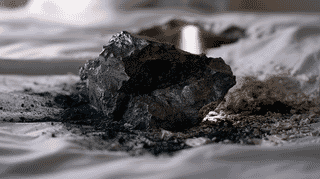
Kyoto and Hiroshima University researchers found that grains Hayabusa2 brought back from asteroid Ryugu begin altering within weeks on Earth. Here is how the decay starts with an iron sulfide, what it means for Bennu and Phobos samples, and how Japan is reacting.
JAXA's H3 rocket No. 6 reached orbit on June 12, 2026, debuting the booster-less, lowest-cost Type 30 and resuming flights after a six-month grounding. But an object seen falling near the engines is now under investigation.
Japan's Defense Ministry has quietly hired Space Compass to study a homegrown stratospheric platform. Roughly 20 km up, between airliners and satellites, the US, UK, China and India are already racing for a sensor that never blinks. Here is the military picture of the near-space contest.
When Artemis II passed behind the Moon, the crew went 40 minutes without a signal. A sustained lunar presence needs always-on infrastructure, not one-shot mission links. We trace what KDDI, the carrier that once relayed Japan's international calls, is building with laser comms and multi-hop relays, and ask how close it really is.
In 2004, Japanese cosmologist Katsuhiko Sato said 96% of the universe was a mystery. Twenty years and billions of galaxies later, it still is—and DESI's latest data suggests the mystery just got deeper. Here's why that's not a failure.
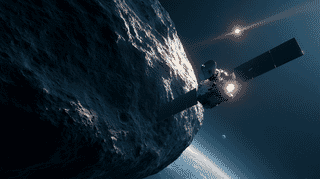
On July 5, 2026, at around 6:30 p.m. Japan time, JAXA's Hayabusa2 will pass about 1 km from asteroid Torifune at roughly 5 km per second — crossing the 500-meter body in just 0.1 seconds. Here's why this ultra-fast flyby is so hard, how a body-fixed camera will catch it, and why it matters for planetary defense after NASA's DART.
Japan's H3 Rocket No. 6 was postponed over poor weather. The booster-less test flight carries six small satellites: deorbit sails, a 1 km space tether, a day-and-night telescope, and a French sat that hunts ships gone dark. Here is what each one does.
Tohoku University spinoff Space Quarters has demonstrated its DAIQ orbital assembly robot system on a ground model, showing three kinds of small robots cooperating to pick, place, and weld building panels into a larger structure. We look at how it compares to NASA's cancelled OSAM-1 and DARPA's NOM4D, and what makes Japan's robotics approach distinct.