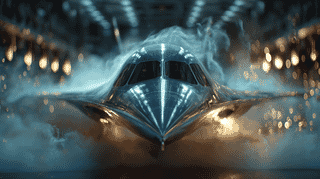
Japan's Defense Ministry has quietly hired Space Compass to study a homegrown stratospheric platform. Roughly 20 km up, between airliners and satellites, the US, UK, China and India are already racing for a sensor that never blinks. Here is the military picture of the near-space contest.
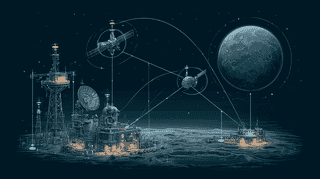
When Artemis II passed behind the Moon, the crew went 40 minutes without a signal. A sustained lunar presence needs always-on infrastructure, not one-shot mission links. We trace what KDDI, the carrier that once relayed Japan's international calls, is building with laser comms and multi-hop relays, and ask how close it really is.
In 2004, Japanese cosmologist Katsuhiko Sato said 96% of the universe was a mystery. Twenty years and billions of galaxies later, it still is, and DESI's latest data suggests the mystery just got deeper. Here's why that's not a failure.
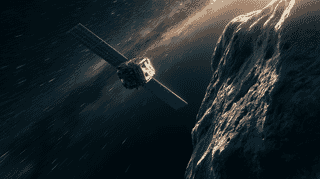
On July 5, 2026, at 6:30 p.m. Japan time, JAXA's Hayabusa2 passed asteroid Torifune at roughly 5.3 km per second, crossing the 500-meter body in about 0.1 seconds. Here's why this ultra-fast flyby was so hard, how a body-fixed camera caught it, and why it matters for planetary defense after NASA's DART.
Japan's H3 Rocket No. 6 was postponed over poor weather and flew successfully on June 12, 2026. The booster-less test flight carried six small satellites: deorbit sails, a 1 km space tether, a day-and-night telescope, and a French sat that hunts ships gone dark. Here is what each one does.
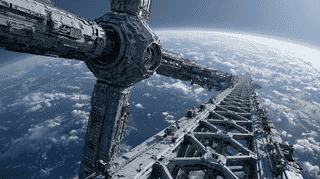
Tohoku University spinoff Space Quarters has demonstrated its DAIQ orbital assembly robot system on a ground model, showing three kinds of small robots cooperating to pick, place, and weld building panels into a larger structure. We look at how it compares to NASA's cancelled OSAM-1 and DARPA's NOM4D, and what makes Japan's robotics approach distinct.
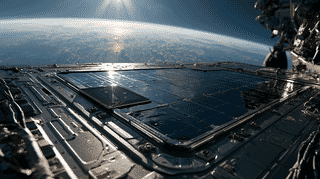
Japan's new cargo ship HTV-X1 reentered the atmosphere on the night of May 26, 2026, completing a roughly seven-month mission (JAXA announced it the next day). In its final three months it gathered on-orbit data on next-gen space solar cells, including a domestic perovskite made by Ricoh, and received a radio signal from the ground. Here's why perovskite in space is a different story from perovskite on rooftops.
Honda's full-scale eVTOL demonstrator, designated F1, completed its first flight in the US, hovering for about 90 seconds. Instead of going all-electric, Honda chose a gas-turbine hybrid built for 400km-plus intercity range. Here's the contrarian bet, and the F1 and HondaJet technology behind it.
JAL, JALUX and ispace have unveiled ARGO PROJECT, the first lunar transport service run by an airline. A box called Möbius Ark will carry cultural items to the Moon on ispace's Mission 3 in 2028. Here is why a 75-year-old airline is moving into space logistics.
Japanese Unreal Engine studio Historia has unveiled REAL MOON Studio, a lunar digital twin recreating a 240km by 240km stretch of the Moon's south pole. Built on joint research with JAXA, it lets engineers rehearse rover routes, preview camera shots, and plan lunar bases - a look at how game-engine technology is quietly joining the global Moon race.
Tohoku University researchers have proven for the first time that microscopic surface roughness can reduce air drag by up to 43.6%, overturning an 80-year-old fluid mechanics consensus dating back to the 1940s. Here is what this discovery could enable for aircraft, cars, ships, bullet trains, and drones, and how it differs from riblets and golf ball dimples.