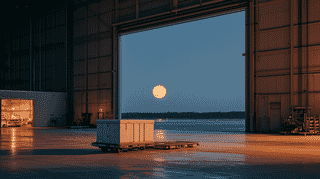
JAL, JALUX and ispace have unveiled ARGO PROJECT, the first lunar transport service run by an airline. A box called Möbius Ark will carry cultural items to the Moon on ispace's Mission 3 in 2028. Here is why a 75-year-old airline is moving into space logistics.
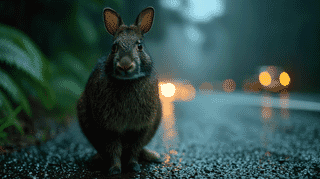
Roadkill of the Amami black rabbit, a 'living fossil' found only on two southern Japanese islands, hit a record 185 in 2025. The grim milestone is a side effect of Japan's celebrated invasive-species eradication programs, including a 24-year mongoose campaign declared complete in 2024.
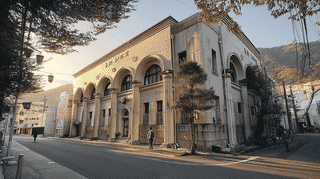
ufotable, the studio behind Demon Slayer: Infinity Castle Chapter 1 and its ¥117.9 billion worldwide gross, announced on May 11, 2026 the acquisition of a 98-year-old former Mizuho Bank building in Tokushima. The 1928 structure, which survived the WWII firebombing of the city, will become a new entertainment hub and could turn into the next must-visit destination for global Demon Slayer fans making the pilgrimage to Japan.
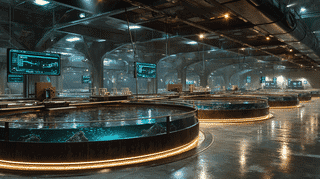
Japanese telecom giant NTT runs a land-based shrimp farm in Iwata, producing 180 tons/year and capturing the largest domestic share. A deep dive into the 10-year plan to free Japan from its 90% shrimp import dependence, plus how it stacks up against Norway and Singapore.
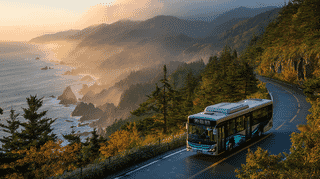
JR East launches Japan's fastest and longest Level 4 autonomous bus on May 29, 2026, on the tsunami-rebuilt Kesennuma BRT in Miyagi Prefecture: 60 km/h top speed and 15.5 km route, both national records. As China's Baidu and Waymo race ahead with city robotaxis, Japan is taking a quieter, magnet-marker path on dedicated bus corridors.
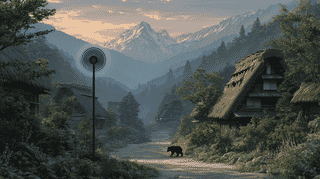
In April 2026, all six Tohoku prefectures issued their earliest-ever bear alerts. A fatal attack in Iwate, Aomori's first urban emergency hunting in Hachinohe. Meanwhile, Shirakawa-go deployed 10 'Bear Sonic' units emitting a chalkboard-scratching sound. In Toyama, sightings dropped to zero for a year after installation. Can this Japanese acoustic technology save the day?
Air Canada launches the first-ever direct flight between North America and Hokkaido in December 2026, connecting Vancouver and Sapporo's New Chitose Airport with three weekly Boeing 787 services. Who it targets, why now, and what makes Hokkaido a winter prize.
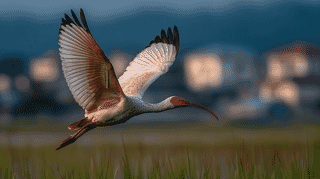
On May 31, 2026, Crested Ibises were released in Hakui City, Ishikawa, the first wild release on Honshu in 56 years. Crown Prince Akishino and Princess Kiko attended, returning to a milestone they witnessed in 2008 on Sado Island. The release is also a symbol of recovery from the 2024 Noto Peninsula earthquake. We compare this revival story with the California Condor and Korean Oriental Stork programs.
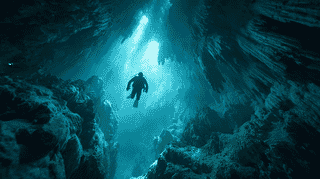
At Inazumi Underwater Cave in Oita Prefecture, professional diver Yuji Ohama (60) and his team reached 97.4m depth on March 20, 2026, likely a Japanese national record for underwater limestone caves. Formed 300 million years ago and submerged by an Aso volcanic eruption 85,000 years ago, the cave's deepest section revealed primordial stalactites and geological strata never seen above ground. We compare this discovery with Mexico's cenotes and Florida's cave systems, and explore Japan's only commercially diveable underwater limestone cave.
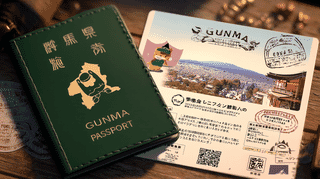
Gunma Prefecture's passport-style pamphlet, GUNMA PASSPORT, hit its full print run of 10,000 applications on its first day of issue, May 1, and the queue closed. Behind the rush sits a 15-year-old internet joke about "the unexplored land of Gunma" and the idea that Japan is really two countries, plus the self-deprecating humour of North Kanto's place near the bottom of the prefectural attractiveness ranking. The prefecture has since reprinted 30,000 more.
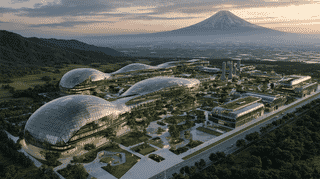
Kumamoto Prefecture, Koshi City and Mitsui Fudosan signed a partnership agreement on April 27 to launch a 31-hectare 'Kumamoto Science Park' core hub — modeled on Taiwan's Hsinchu — to anchor Japan's semiconductor revival around TSMC's 3nm Kumamoto fab by 2030. We compare it with the US CHIPS Act and EU Chips Act, and unpack the land-price spikes and labor crunch already reshaping the region.
Ainoshima, a tiny island off Fukuoka, is home to roughly 200 cats that outnumber its 270 human residents. Named one of CNN's top 6 cat spots worldwide, this heart-shaped island is going viral again on TikTok and Instagram in spring 2026. Discover the fishing village coexistence, TNR efforts, and how to visit.
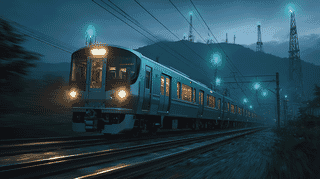
JR Kyushu's new RK System will control trains over public cellular networks starting 2028—a Japan-first approach. How it compares to Europe's ERTMS and America's PTC, and what it means for aging societies everywhere.
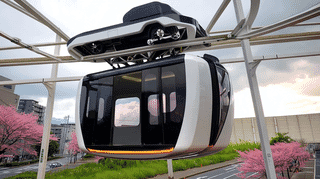
Zippar, a self-propelled urban ropeway developed by Fukushima-based startup Zip Infrastructure, can run every 12 seconds and navigate curves. At 1/20 the cost of subway and 1/5 of monorail construction, it could rescue Japanese cities facing a bus driver shortage.
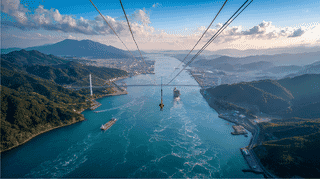
A 1,740m zipline across Japan's Kanmon Strait stalled for 2 years over funding, but Shimonoseki has restarted with a new feasibility study. The mayor declared he won't give up on this $9.4M project to fly riders at 110 km/h over samurai battlegrounds.
The global matcha boom has reached even Kagawa, Japan's smallest prefecture famous for udon noodles. With a $31,000 research budget, Kagawa is exploring tencha production as green tea exports hit $450 million. Here's why the matcha gold rush now spans the entire country.
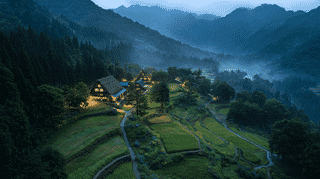
In Itoigawa, Niigata, a hamlet with just 2 year-round residents has launched a 'whole-village rental' stay experience. Guests sleep in a 200-year-old farmhouse and experience the entire village, rice paddies, spring water, snow, as their accommodation. A new model for reviving Japan's vanishing communities.
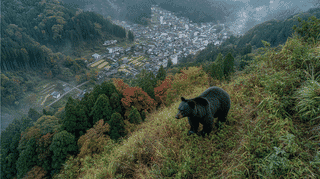
After record-breaking 238 bear attack victims and 13 deaths in FY2025, Japan's Ministry of Environment unveils revised guidelines introducing expanded exclusion zones and a new 'enhanced management area' to separate humans and bears.
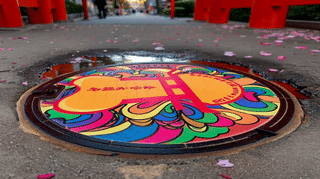
A new manhole cover featuring a fertility god symbol has appeared in Ninohe, Iwate Prefecture. Discover Japan's unique manhole art culture, the booming manhole card collecting hobby, and the connection to festivals like Kanamara Matsuri.
JTB and MOTO TOURS JAPAN have partnered to develop premium motorcycle tourism for affluent travelers from the West and ASEAN. Discover Japan's legendary riding routes and how to rent a bike as a foreign visitor in the homeland of Honda, Yamaha, Kawasaki, and Suzuki.