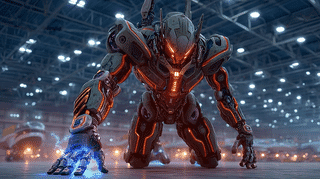
Japanese robotics startup Jinki Ittai unveils its Bilateral Arm — a collaborative robot that transmits force feedback to operators — at Japan IT Week 2026. Also on display: a transformable humanoid heavy machine designed by Macross anime creator Shoji Kawamori. Partnering with Advantech (42.5% global IPC share), the company pursues a distinctly Japanese approach to robotics: human-operated force control rather than full autonomy, setting it apart from Boston Dynamics and Tesla Optimus.
Omron announced it will sell its founding electronic components business — relays, sensors, and connectors dating back to 1933 — to U.S. private equity firm Carlyle Group at an enterprise value of ¥81 billion ($540M). A deep dive into Omron's strategic pivot to industrial automation and healthcare, and what this means for Japan's electronics industry restructuring.
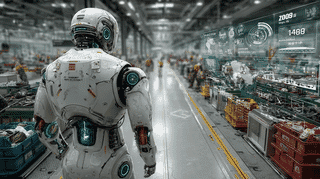
Four Japanese companies formed J-HRTI, a consortium to accelerate humanoid robot deployment in factories. With Japan's first private data collection center opening in July 2026, the initiative takes a unique approach focused on industrial data and real-world implementation amid fierce US-China competition.
Japan's top drone company Terra Drone has announced its full-scale entry into the defense equipment market, establishing U.S. subsidiary 'Terra Defense.' The move comes amid Japan's record defense spending, the SHIELD coastal defense initiative, and growing global demand for military drones post-Ukraine.
Japan's Ministry of Economy, Trade and Industry (METI) has formulated a roadmap for deploying AI-powered autonomous robots in security, waste management, and other labor-short sectors by 2030. While Japan commands ~70% of the industrial robot market, it lags behind the US and China in service robotics. The government now targets 30%+ global market share and $130 billion in the AI robot market by 2040. Here's what this national strategy means for Japan and the world.
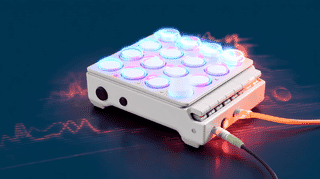
Japanese startup DOT P unveiled PONKEY, a solenoid-powered instrument robot, at SXSW 2026 in Austin, Texas. Featuring 16 custom-designed keys that light up, produce sound, and physically pop out, PONKEY functions as a drum machine, digital synthesizer, and AI communication device. Backed by Tokyo's TOKYO SUTEAM program, it's set for public release in 2027.
Aizawa Concrete's F3DP is a gasoline-powered drone with a robotic arm and nozzle that extrudes concrete in flight. It is aimed at printing formwork for floating offshore wind platforms by the end of 2028. A machine born from Japan's construction math: 4.77 million workers, 36.6% of them over 55.
Yaskawa's June 2026 plan puts 120 billion yen into Physical AI. FANUC published a ROS 2 driver on GitHub and partnered with both NVIDIA and Google. Mujin raised 36.4 billion. Japan still owns 35% of an industrial robot's cost through precision reducers, but the killer app hasn't shown up.
Citizen Electronics has built the first pressure sensor switch that also gives a physical click, reading 0.35 mm of travel across roughly 6,000 steps. Its metal spring tames hysteresis, the chronic flaw in pressure sensors, opening the door to analog game buttons and robot fingertips.
AGIBOT, the world's top humanoid robot shipper from China, has established a Japanese subsidiary for full-scale market entry. Having shipped over 5,100 units globally in 2025 with 39% market share, the company claims the humanoid market will surpass the auto industry. We examine how Japan — an industrial robotics powerhouse — now trails China and the US in humanoid development, and explore adoption potential in Japan's labor-starved manufacturing and elderly care sectors.
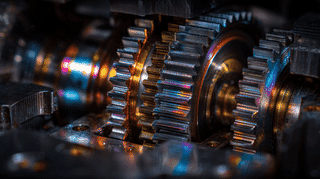
The "joints" (actuators) that humanoid robots need over 50 of per unit are the key to industry dominance. These critical components account for up to 60% of manufacturing costs, and two Japanese companies, Harmonic Drive Systems and Nabtesco, dominate the high-precision reducer market, each leading its own reducer type. As the market grows at 80% annually and mega-corporations from the US, China, and Korea enter the race, can Japan defend its "joint hegemony"?