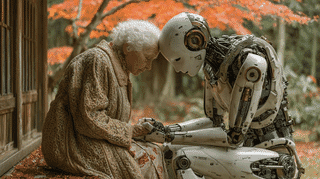
Yaskawa's June 2026 plan puts 120 billion yen into Physical AI. FANUC published a ROS 2 driver on GitHub and partnered with both NVIDIA and Google. Mujin raised 36.4 billion. Japan still owns 35% of an industrial robot's cost through precision reducers, but the killer app hasn't shown up.
Citizen Electronics has built the first pressure sensor switch that also gives a physical click, reading 0.35 mm of travel across roughly 6,000 steps. Its metal spring tames hysteresis, the chronic flaw in pressure sensors, opening the door to analog game buttons and robot fingertips.
AGIBOT, the world's top humanoid robot shipper from China, has established a Japanese subsidiary for full-scale market entry. Having shipped over 5,100 units globally in 2025 with 39% market share, the company claims the humanoid market will surpass the auto industry. We examine how Japan — an industrial robotics powerhouse — now trails China and the US in humanoid development, and explore adoption potential in Japan's labor-starved manufacturing and elderly care sectors.
The "joints" (actuators) that humanoid robots need over 50 of per unit are the key to industry dominance. These critical components account for up to 60% of manufacturing costs, and two Japanese companies, Harmonic Drive Systems and Nabtesco, dominate the high-precision reducer market, each leading its own reducer type. As the market grows at 80% annually and mega-corporations from the US, China, and Korea enter the race, can Japan defend its "joint hegemony"?
AVITA, led by world-renowned roboticist Hiroshi Ishiguro, has acquired all shares of android robot developer A-Lab, marking a full-scale entry into Physical AI. With A-Lab's track record including androids for Expo 2025, AVITA aims to evolve from CG avatars to physical robots. As the U.S. and China lead the humanoid market, this move signals Japan's push to reclaim its robotics legacy. How does your country view humanoid robots?
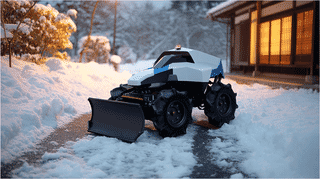
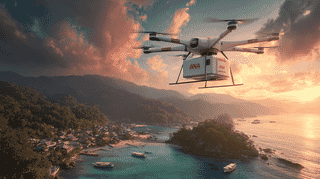
A compact snow-removal drone developed in Hokkaido went viral during Tokyo's February 2026 snowstorm, racking up 240,000 views on social media. Startup everblue technologies adapted 6 years of water drone expertise to create a $6,500 unmanned snow plow designed to clear snow before it accumulates. Could this "tiny giant" revolutionize winter life in Japan's aging snow country?
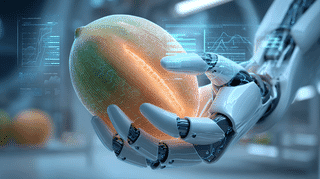
Shibaura Institute of Technology's "InSIGHT Grip" is a non-destructive inspection technology that estimates internal quality simply by gripping objects with a robot hand. With a low-cost, sensor-free design, it promises applications from fruit sorting in agriculture to industrial deterioration detection.
The US CCA program, China's loyal wingmen, and Japan's GCAP-linked combat drones. As nations race to develop AI-powered unmanned combat aircraft, we examine where Mitsubishi Heavy Industries and Kawasaki Heavy Industries stand, and the structural challenges Japan's defense industry must overcome.
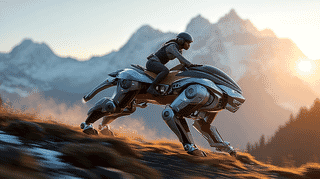
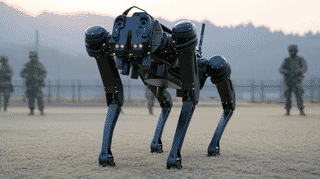
Kawasaki Heavy Industries is developing CORLEO, a four-legged personal mobility vehicle powered by hydrogen. After achieving 1.2 billion social media impressions at Osaka Expo 2025, the company targets deployment at Riyadh Expo 2030 and commercial sales by 2035. Discover the futuristic robot horse and global reactions.
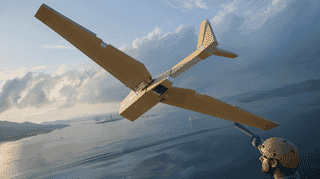
Japanese startup AirKamuy has developed a cardboard military drone priced at just $2,000—one-tenth the cost of conventional fixed-wing UAVs. The AirKamuy 150 assembles in 5 minutes, flies at 120 km/h for 2 hours, and is attracting attention from Japan's Ministry of Defense and Coast Guard. How is this disruptive innovation reshaping defense technology?
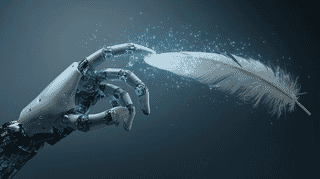
Bosch's groundbreaking sensors unveiled at CES 2026 are revolutionizing robotics. By combining the BMP585 pressure sensor with IMU technology, robots can now detect even the lightest touch—like a feather brushing against their fingers. Explore the frontier of humanoid robot tactile technology and the MEMS sensor market projected to reach $19.2 billion by 2030. How does your country view robot tactile technology?