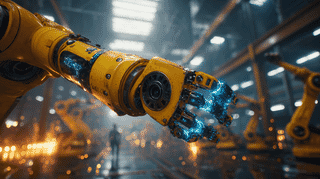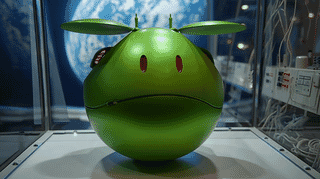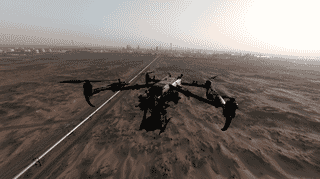
Tohoku University spinoff Space Quarters has demonstrated its DAIQ orbital assembly robot system on a ground model, showing three kinds of small robots cooperating to pick, place, and weld building panels into a larger structure. We look at how it compares to NASA's cancelled OSAM-1 and DARPA's NOM4D, and what makes Japan's robotics approach distinct.
Sony AI's autonomous robot Ace beat elite table tennis players and made the cover of Nature. From its Gran Turismo Sophy roots to the fast-ball wall that stumped DeepMind and a 20.2-millisecond reaction loop, here's how Sony's robot reached elite-competitive level in a real, physical sport.
Kawasaki Heavy Industries, maker of jets, bullet trains and motorcycles, has opened a physical AI development hub in Silicon Valley, teaming up with NVIDIA, Analog Devices, Microsoft and Fujitsu. We unpack why a 130-year-old industrial giant is betting on AI that acts in the real world, and where Japan stands in the US-China robotics race.
Fujitsu's new Kozuchi Physical OS isn't trying to build a smarter robot brain. It's trying to make the whole physical space intelligent. Here's how its edge-plus-sovereign-cloud design differs from NVIDIA Cosmos and Google DeepMind's Gemini Robotics — and how it fits into Japan's $126B Physical AI ambition.
Terra Drone has solo-won a contract worth 10.15 million Saudi riyals, about 2.7 million dollars, for pipeline security surveillance in eastern Saudi Arabia. Here is how Japan's industrial drone champion is moving from inspection into AI-driven security patrols, and how it is threading between Skydio's NDAA-compliant U.S. push and DJI's exclusion from new U.S. approvals.
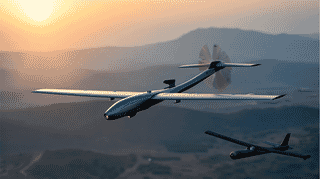
Terra Drone has unveiled flight footage of its fixed-wing interceptor drone Terra A2 — 75km range, 312km/h top speed, 40-minute endurance. CEO Toru Tokushige outlined the layered air defense vision in a United24 Media interview. Inside the modern methods of stopping Shahed-type kamikaze drones and the new air defense economics being shaped by a Japanese startup.
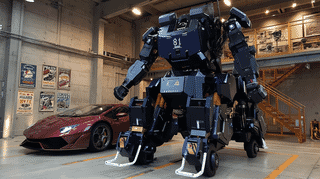
Tsubame Industries' Archax is a 4.5-meter, 3.5-ton piloted robot that transforms between robot and vehicle modes, priced at 400 million yen. What that buys, the CTO who engineered Yokohama's moving life-size Gundam, the Shoji Kawamori special edition, and how Unitree's $650,000 GD01 changed the competitive picture in May 2026.
JAL launches Japan's first humanoid robot trial at Haneda Airport in May 2026. Chinese-made Unitree G1 and UBTECH Walker E will handle cargo loading and cabin cleaning, Japan's bipedal answer to its aging workforce and aviation labor crisis.
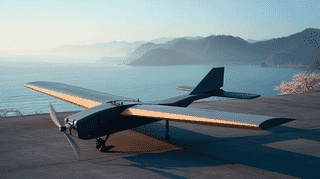
JISDA (Japan Integrated Security Design Agency) has launched the Shiraha, a wooden fixed-wing drone costing just 70,000 yen (about 440 USD). Built on three years of field research within 20 km of Ukraine's front line, it targets Japan's training-attrition gap. How it differs from AirKamuy's cardboard drone and why Japan's defense mindset is finally shifting.
Kyoto University's AI-powered robot monk Buddharoid now offers spiritual guidance at a Kyoto temple, trained on ancient Buddhist scriptures. With 30% of Japan's 77,000 temples projected to vanish by 2040, can artificial intelligence save Buddhism? From the $1M Mindar android to BuddhaBot chatbots reaching Bhutan, we explore where faith meets technology.
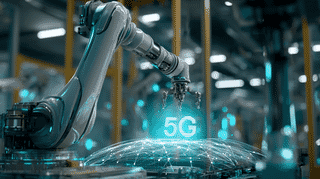
SoftBank Group is betting big on Physical AI, merging telecom infrastructure with robotics. From its $5.4B ABB acquisition to AI-RAN partnerships with NVIDIA, Arm, and Yaskawa, here's how Japan's tech giant plans to make robots think and move in real time.