PM Takaichi met BOJ Governor Ueda on May 22 and asked the central bank to carry out 'appropriate policy.' We explain Japan's central bank independence next to the US Fed and the ECB, and how a weak yen near 159 and the carry trade tie this to global markets.
Top shareholder Oasis Management is pushing to remove KADOKAWA CEO Takeshi Natsuno, triggering a full proxy fight ahead of the June 24 shareholder meeting. We break down the arguments over an 89% EPS drop, the 'isekai over-reliance' critique, and FromSoftware's monetization, and check how our earlier predictions held up.
OpenAI is moving to offer its newest cyber-focused AI model, GPT-5.5 Cyber, to the Japanese government and industry. Former NSA Director Paul Nakasone, now an OpenAI board member, flew to Tokyo to pitch critical-infrastructure cooperation. We unpack the contrast with Anthropic's tightly controlled Claude Mythos, the China-threat framing, and what it means that OpenAI wants Japan as its first international partner.
Mazda launched the third-generation CX-5 in Japan on May 21, 2026, starting at 3.3 million yen (around $20,800). With 5 million sold globally, this redesigned SUV is Mazda's bet on hybrids and combustion as the EV boom cools, and how it stacks up against Toyota RAV4, Honda CR-V, Tesla, and BYD.
Hoku Energy K.K., the Japanese subsidiary of UK-based Hoku Infrastructure, will build Japan's first new-build 100% hydrogen mono-firing thermal power plant in Aomori Prefecture. The 106.6MW Daiichi Plant, awarded under Japan's 3rd Long-Term Decarbonized Power Source Auction, is scheduled to start operations in the early-to-mid 2030s. We compare it with hydrogen power efforts by Plug Power, MHI in Utah, Linde, Air Liquide, and South Korea's Doosan, and explain what it means for Japan's GX strategy.
Fujitsu's new Kozuchi Physical OS isn't trying to build a smarter robot brain. It's trying to make the whole physical space intelligent. Here's how its edge-plus-sovereign-cloud design differs from NVIDIA Cosmos and Google DeepMind's Gemini Robotics — and how it fits into Japan's $126B Physical AI ambition.
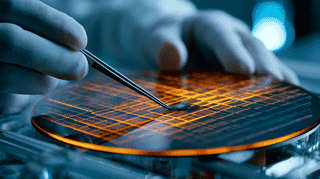
An Osaka University team has shrunk a key step in magnetic tunnel junction fabrication from hours to about 1.7 seconds using flash-lamp annealing—up to thousands of times faster than conventional methods, with implications for MRAM mass production and flexible sensors.
Kyoto University spinout Toregem Biopharma will begin Phase 2 trials of TRG035, the world's first tooth-regeneration drug, in summer 2026, dosing 24 children with congenital tooth agenesis. A pre-Series C round of ¥850 million brings cumulative funding, grants included, past ¥4.6 billion. A look at how Japan's university-biotech funding stack works, and why a super-aged society may produce this kind of innovation first.
On May 19, Japan's ruling LDP unveiled a policy proposal calling for stablecoins and tokenized deposits to be treated as national financial infrastructure — and added to PM Takaichi's Big-Boned Policy in June. We compare Japan's approach with the Web3 hubs of Singapore, Hong Kong and the UAE.
Kyoto University associate professor Mitsuaki Kaneko is commercializing SiC-based mixed-signal LSIs that work where silicon fails. His complementary JFET approach targets ADC samples in 2028-2029, opening a niche the big five SiC power players have largely ignored.
On May 16, 2026, BOJ Deputy Governor Ryozo Himino delivered a keynote on the 'singleness of money' at the Japan Society of Monetary Economics. Beyond the binary of US-style stablecoin policy and a digital euro, the BOJ is quietly exploring a third path built on tokenized deposits and tokenized central bank reserves on blockchain.