Japan's H3 Rocket No. 6 was postponed over poor weather and flew successfully on June 12, 2026. The booster-less test flight carried six small satellites: deorbit sails, a 1 km space tether, a day-and-night telescope, and a French sat that hunts ships gone dark. Here is what each one does.
Sanyo Special Steel, Japan's No.1 maker of bearing steel and a world leader in steel cleanliness, will be absorbed by Nippon Steel and dissolved on April 1, 2027. The model for the famous novel The Grand Family, it once suffered postwar Japan's largest bankruptcy. Why give up the name now? A look at China's steel glut and an unexpected Swedish thread.
Intel installed the first production-grade High-NA EUV machine; TSMC bought one but kept it out of production. Being slow to the newest lithography once cost Intel a lost decade. Is TSMC repeating that mistake? Its confidence rests on Japan: Mitsui Chemicals' EUV pellicle and the HOYA/Shin-Etsu/AGC mask-blank near-monopoly (about 90% share).
The Bank of Japan began selling its ETFs, yet its holdings ballooned past 110 trillion yen, over 8% of the Tokyo market. Why the Fed and ECB never bought stocks, how Switzerland differs, and whether central banks should own equities at all.
Mitsui Chemicals was first in the world to mass-produce the EUV pellicle, a free-standing film tens of nanometers thick. From the ASML license to the carbon-nanotube pivot and a 2027 upgrade, here is why one invisible bottleneck sits with a single Japanese plant.
Not TSMC, not ASML. A Japanese chemical maker with ~$240M in sales quietly supplies about 70% of the world's photoresist sensitizer: the ingredient inside the ingredient that prints every advanced chip.
Japan discards 650,000 tons of small electronics a year, yet recovers only a little over a tenth of it. The rest mostly leaks abroad through an untracked invisible flow. On June 5, 2026, the Environment Ministry picked six pilots enlisting movers and couriers to keep the metals home.
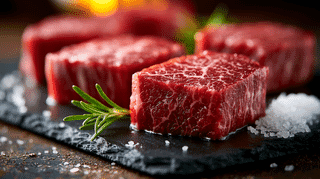
Kobe Beef and Miyazaki are on menus worldwide, yet Mishima and Iga beef never leave Japan. As wagyu exports hit record highs, here is why some brands cross the ocean and others stay home, from breeds and slaughterhouses to the stalled China resumption.
Dysprosium and terbium, essential to EV magnets, were China's one unbroken monopoly. In 2025, Australia's Lynas, backed by Japan since 2011, produced them outside China for the first time. What it means, and what it doesn't.
JX Advanced Metals, maker of roughly 60% of the world's sputtering targets, is investing about 23 billion yen to expand its Hitachinaka plant by 1.6x and selling its Chilean copper mine stake to Lundin Mining for $215 million, redirecting the cash into chip materials. A look at a 120-year-old miner remaking itself as an advanced-materials company.
A fresh 150-billion-yen government injection pushes the state's share of Rapidus's capital to roughly 60%. Yet Tokyo capped its voting rights at 11.5%, keeping the firm out of state-enterprise territory by design. We unpack subsidies versus equity, the fate of the 2nm skeptics, and the question of who will actually buy the chips.