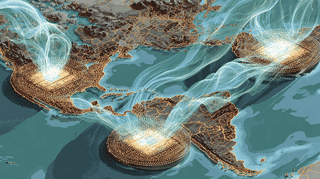
NEC has completed the East Micronesia Cable System (EMCS), a 2,250-kilometer optical submarine cable that gives three Pacific island nations their first-ever fiber connectivity. For Tarawa, Nauru, and Kosrae, roughly 100,000 people who had only known the 600-millisecond delay of satellite internet, the upgrade is transformative. The backstory is equally striking: in 2018, China's HMN Tech (formerly Huawei Marine) underbid NEC and Alcatel Submarine Networks by more than 20%. A 2020 US diplomatic warning to Micronesia, the World Bank's withdrawal, and a 2021 Japan-US-Australia rescue plan rewrote the project. Five years later, the cable is in the water.
Caviar's definition of 'best' has shifted from geography to aquaculture technology. As China supplies 60% of the world's farmed caviar and Russian product disappears under sanctions, a landlocked Japanese prefecture is challenging the global hierarchy with a hybrid land-based farming system that combines patented closed-loop tech with rare ultra-soft spring water.
Why a Nissan deep in restructuring picked Red Hat for its next-generation in-vehicle OS. We unpack the trap of in-house software development that cost Volkswagen's CARIAD 14 billion euros, and the path Nissan chose to avoid it.
Kawasaki Heavy Industries has begun pitching a technology that produces naphtha, the building block of plastics, from hydrogen instead of crude oil. Built on its commercial gas-to-gasoline plant in Turkmenistan, the proposal lands in the middle of a Japanese petrochemical crisis triggered by the Strait of Hormuz disruption.
A black, sponge-like slab that floats with just lamp light has racked up 1.8 million views in a week. Developed at Nagoya University by Tomonaga Ueno, the carbon-nanotube aerogel is lighter than air and could quietly reshape EVs, eVTOL aircraft, drones and spacecraft. Here's how it actually works, and why the startup Sora Material thinks it's an industrial workhorse, not just a viral trick.
TSMC's Japanese subsidiary JASM posted a quarterly profit of NT$951 million (about $30 million / ¥4.78 billion) in Q1 2026, the first time the Kumamoto fab has been in the black since mass production began in December 2024. We unpack what the 14-month turnaround means against the backdrop of Japan's ¥1.23 trillion in subsidies, the Sony-Denso-Toyota partnership, TSMC's Arizona and Dresden expansions, and Rapidus's high-stakes 2nm bet.
Japanese toy, video and game distributor Happinet reported its FY26 results, with video game segment profit surging 772% year-over-year to 2.2 billion yen (about $14 million). Behind the spike: Nintendo Switch 2 and its software lineup, plus the ripple effect of a console generation transition through Japan's entire game distribution ecosystem. Here's what was happening behind Nintendo's 19.86 million unit sell-through.
Toshiba reported record net profit of 1.9673 trillion yen (about $12.5 billion) for fiscal 2025, a sevenfold jump driven by gains from selling its stake in Kioxia and a structural surge in transmission and HDD demand from AI data centers. Nearly two years after the JIP-led privatization, what has Japan's biggest private-equity restructuring actually changed? We compare it with Blackstone's Hilton success and the cautionary tale of Toys R Us.
Japan's three megabanks (MUFG, SMFG, and Mizuho) posted a combined net profit of 5.26 trillion yen ($33B) for the fiscal year ended March 2026, breaking the 5-trillion-yen barrier for the first time. We unpack how BOJ rate hikes drove the surge, how the numbers compare to JPMorgan and HSBC, and what Japan's monetary normalization means for global markets.
Kioxia forecast a 48-fold jump in Q1 net profit to 869 billion yen ($5.5 billion), making the Japanese NAND maker Japan's single-largest AI beneficiary on a quarterly basis after Toyota. We unpack the US ADS listing plan, the supercycle reshaping NAND prices, the HBM gap with Samsung and SK Hynix, and what it all means for Japan's broader semiconductor revival.
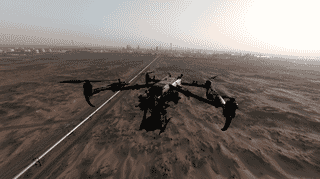
Terra Drone has solo-won a contract worth 10.15 million Saudi riyals, about 2.7 million dollars, for pipeline security surveillance in eastern Saudi Arabia. Here is how Japan's industrial drone champion is moving from inspection into AI-driven security patrols, and how it is threading between Skydio's NDAA-compliant U.S. push and DJI's exclusion from new U.S. approvals.