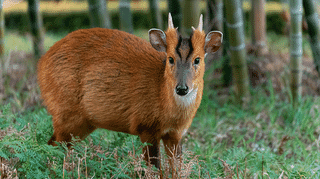
A Reeves's muntjac was sighted in Sakai, Ibaraki Prefecture in late April, the first confirmed sighting in two years and five months. Under Ibaraki's first-of-its-kind ¥2,000 bounty program for citizen-submitted photos, this should have been the first qualifying case. Why is Japan offering cash for sightings of a cute, dog-sized deer? We unpack the agricultural damage, the SFTS tick-borne disease angle, the unsettling lessons from Britain, and what happens if the front line in Ibaraki fails.
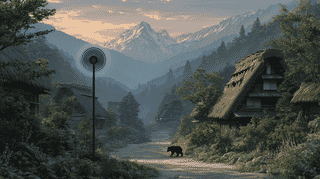
In April 2026, all six Tohoku prefectures issued their earliest-ever bear alerts. A fatal attack in Iwate, Aomori's first urban emergency hunting in Hachinohe. Meanwhile, Shirakawa-go deployed 10 'Bear Sonic' units emitting a chalkboard-scratching sound. In Toyama, sightings dropped to zero for a year after installation. Can this Japanese acoustic technology save the day?
Frass discovered on a wild cherry tree at Yoshinoyama, Nara—home to 30,000 sacred cherry trees revered for 1,300 years—has been confirmed as damage from the invasive red-necked longhorn beetle. The first such case in any Japanese national park. A story at the intersection of invasive species, climate change, and cultural heritage.
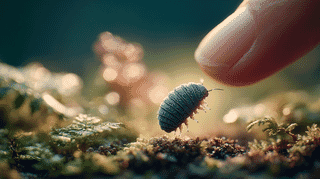
Researchers at the University of Tsukuba have discovered that pill bugs (Armadillidium vulgare) don't just incorporate the calcium carbonate they eat; they rebuild it from scratch inside their bodies, always producing calcite even when fed aragonite. The unexpected polymorph control reveals a deeper biomineralization mystery and may inspire next-generation biomimetic materials.
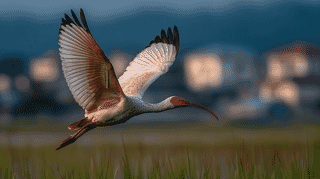
On May 31, 2026, Crested Ibises were released in Hakui City, Ishikawa, the first wild release on Honshu in 56 years. Crown Prince Akishino and Princess Kiko attended, returning to a milestone they witnessed in 2008 on Sado Island. The release is also a symbol of recovery from the 2024 Noto Peninsula earthquake. We compare this revival story with the California Condor and Korean Oriental Stork programs.
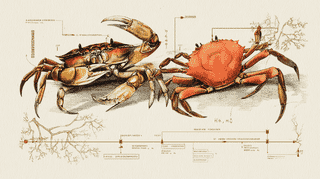
When did crabs start walking sideways? A Japan-US-Taiwan team led by Nagasaki University filmed 50 species and mapped them onto a phylogenetic tree, finding that sideways walking evolved just once around 200 million years ago, published in eLife.
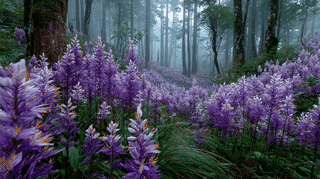
In central and southern Nagano, the dwarf bamboo Suzutake has begun a mass flowering said to occur roughly once every 120 years. The last record in northern Kamiina was 1906. The interval comes from old documents that logged "bamboo rice" harvests during famines, though the prefectural forestry centre says the exact cycle is still unknown and another mass flowering was recorded in 2017. Predator satiation, the risk that nothing regenerates afterwards, and how this compares with India's Mautam famine.
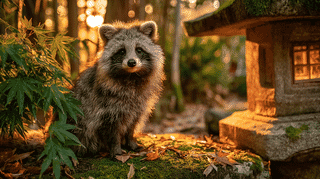
Tanuki Marugoto BOOK hit #1 in twelve Amazon Japan categories on pre-orders alone before its May 1 release, and topped Rakuten Books' daily ranking. Shigaraki pottery and its eight lucky aspects, Studio Ghibli's Pom Poko, Tom Nook in Animal Crossing, and a single social post about a defeated-looking tanuki with 96.5 million views. Why this animal is loved across so many cultural layers in Japan, explained for readers who keep mistaking it for a raccoon.
A JAMSTEC-University of Tsukuba team has discovered self-replicating circular RNA replicons living in 70-80°C Japanese hot springs. These newly found members of the Obelisk superfamily, a mysterious RNA entity first described by Nobel laureate Andrew Fire in 2024, expand our view of RNA-based life and may offer fresh clues to the RNA world hypothesis on the origin of life.
Ainoshima, a tiny island off Fukuoka, is home to roughly 200 cats that outnumber its 270 human residents. Named one of CNN's top 6 cat spots worldwide, this heart-shaped island is going viral again on TikTok and Instagram in spring 2026. Discover the fishing village coexistence, TNR efforts, and how to visit.
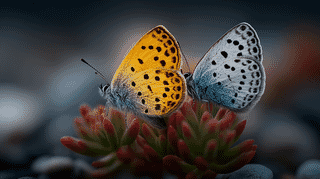
Osaka Metropolitan University researchers discovered that butterflies raised on invasive plants develop altered wing coloration, making them less attractive to potential mates. The study reveals how changes in larval diet affect UV reflection patterns and reproductive success.