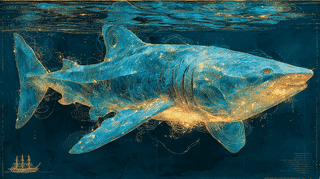
A University of Tokyo-led team has produced the first high-precision genome of the Greenland shark, the longest-lived vertebrate. Changes in a linker histone and the ferritin gene offer the first real clues to its ~400-year lifespan, and to human aging.
Akita Prefecture has adopted environmental DNA surveys that estimate whether bears passed within 1km upstream in the past 24 hours from a single glass of river water. We explain how it works, its limits, and how it compares with grizzly-detection efforts abroad.
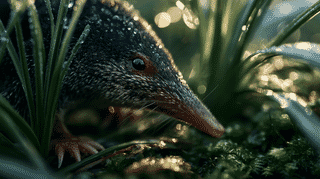
A team from Hokkaido University, Tokai University and Sapporo Maruyama Zoo has bred the slender shrew in captivity for the first time anywhere. Here is how they pulled it off with a mammal that cannot skip a meal, and why it matters for one of the smallest endangered mammals on Earth.
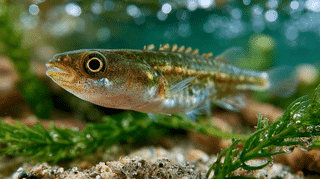
It has its own asteroid and is a prefectural symbol, yet for over 60 years the Musashi stickleback officially didn't exist. How an ice-age survivor near Tokyo finally became a named species, Pungitius nakamurai.
Tokai University is chasing a world-first: land-based, full-cycle aquaculture of the common octopus, long considered one of the hardest animals to farm. We unpack the cannibalism and escape problems, the clever 'octopus apartment,' the global octopus shortage behind it, and the ethical fight that has already produced farming bans abroad.
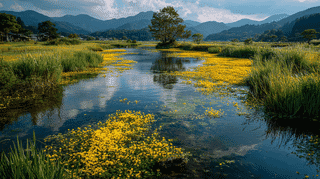
A paddy field in central Japan was swallowed by bright yellow flowers. Water primrose, a South American invader, regrows from the tiniest stem fragment. We look at why farmers cannot kill it, how the same plant is wrecking waterways in France, Britain and the US, and why eradication may be impossible.
Eleven days, 44 countries, 400 delegates. We score the five expectations from our pre-meeting article against the MOFA outcome communique: emperor penguin protection blocked, tourism rules deferred, Annex VI stalled, only the transparency resolution delivered.
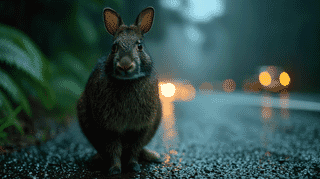
Roadkill of the Amami black rabbit, a 'living fossil' found only on two southern Japanese islands, hit a record 185 in 2025. The grim milestone is a side effect of Japan's celebrated invasive-species eradication programs, including a 24-year mongoose campaign declared complete in 2024.
Yamada Suisan and Japan's fisheries research agency put fully farmed eel on public sale for the first time on May 29. After cutting glass-eel production cost from 40,000 to 1,800 yen, the country aims to end wild-juvenile dependence by 2050.
On May 17, 2026, Empress Masako waved goodbye to a polar bear at Tobe Zoo in Ehime, telling her 'I hate to leave.' Meet Peace, the 26-year-old 'miracle bear' who became Japan's first successful hand-raised polar bear, and the keeper who took her home to live with his family.