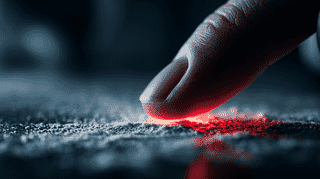
Citizen Electronics has built the first pressure sensor switch that also gives a physical click, reading 0.35 mm of travel across roughly 6,000 steps. Its metal spring tames hysteresis, the chronic flaw in pressure sensors, opening the door to analog game buttons and robot fingertips.
A Japanese research team from Fukui, Tohoku, Chiba, and Tokyo universities has theoretically proposed a new method to detect Majorana particles using spin currents. Not an observation but a proposal, it opens a fresh window onto the quasiparticle behind topological quantum computing, the same goal Microsoft's Majorana 1 chip pursues.
Chiba Institute of Technology has achieved the world's first ground combustion test of thrust vector control (TVC) using a gas hybrid rocket. Part of the Hestia Project, which aims to launch small satellites via balloon-based "Rockoon" method, this breakthrough demonstrated successful thrust vectoring at 2.0 kN over 8 seconds — opening a new path for affordable space access.
On March 6, 2026, Japan's Health Minister formally approved ReHeart (severe heart failure) and Amshepri (Parkinson's disease), the world's first iPS cell-derived medical products. In May, Amshepri became the first iPS product covered by public insurance, priced at 55.3 million yen. Here are the conditions, the seven-year deadline, and the objections.
Chiba Prefecture sits atop an estimated 500-year supply of iodine—the key material in Japan-invented perovskite solar cells. If combined, they could form a fully domestic energy cycle. We break down the potential and the hurdles standing in the way.
Sakana AI, the Tokyo-based startup founded by former Google researchers, has raised $135M to reach a record $2.65B valuation — making it Japan's top unicorn. Citibank made its first-ever strategic investment in a Japanese company through this round. With backing from the CIA's venture arm and Google, Sakana is spearheading Japan's push for sovereign AI.
A Japanese research team has developed OrthologTransformer, a generative AI that treats DNA like a language and redesigns genes to work better in new organisms. The result? Plastic-eating bacteria that are up to 10x more effective. Published in Nature Communications, this breakthrough could reshape how we fight plastic pollution worldwide.
Panasonic's glass-type perovskite solar cells will be installed on the exterior of Hankyu Hanshin Properties' new headquarters—a first for new office buildings in Japan. This landmark step brings Japan-invented next-generation BIPV solar technology closer to mainstream adoption, in a building already certified ZEB Ready and DBJ Green Building 5-Star.
NTT's next-generation communication infrastructure "IOWN" has entered a comprehensive partnership with Europe's ETSI to advance global standardization. With photonics-electronics convergence technology promising 1/100th the power consumption and 1/200th the latency, this Japan-born innovation takes a major step toward becoming the world standard at MWC Barcelona 2026. Can Japan lead the way in the US-China 6G race?
Researchers at Kyoto and Hiroshima Universities created iPS cells from bonobos, chimpanzees, and gibbons, then achieved the world's first differentiation into limb bud mesoderm cells. Inside Japan's Whole-Zoo iPS Cell Project and its work on primate evolution, conservation, and zoo veterinary medicine.
wo wooden walls are bolted to the ground and pulled against each other until one breaks — welcome to Japan's Kabe-1 Grand Prix, where earthquake engineering meets combat sports. Born after the 1995 Kobe earthquake, this competition pits universities, construction giants, and house builders in an all-out battle for the title of Japan's strongest wall. We report on the 2025 tournament with all its humor and hardcore engineering.