In 1998, Akira Furusawa achieved the world's first unconditional quantum teleportation at Caltech. For two decades, no one knew what it was for. By 2024, that same trick was running an optical quantum computer on the cloud. From the teleportation misconception to the reframe that turned it into a processor, and the startup OptQC's push for a homegrown machine.
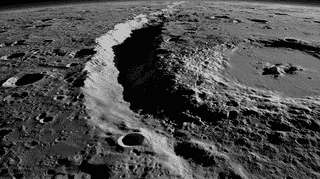
When Artemis II passed behind the Moon, the crew went 40 minutes without a signal. A sustained lunar presence needs always-on infrastructure, not one-shot mission links. We trace what KDDI, the carrier that once relayed Japan's international calls, is building with laser comms and multi-hop relays, and ask how close it really is.
A Japanese radiative cooling film that stays below air temperature in direct sun, with zero electricity. How SPACECOOL dumps heat into space, its 29% energy cut in Saudi trials, and why passive cooling matters as the planet warms.
The pygmy sweeper glows blue from its belly, yet a full read of its 625-million-letter genome turns up no gene for the light-making enzyme. A Japanese team has now confirmed, at the genome level, that the fish runs entirely on a protein stolen from its prey - the only known case of its kind, with possible payoffs for oral protein drugs.
In 2004, Japanese cosmologist Katsuhiko Sato said 96% of the universe was a mystery. Twenty years and billions of galaxies later, it still is—and DESI's latest data suggests the mystery just got deeper. Here's why that's not a failure.
On July 5, 2026, at around 6:30 p.m. Japan time, JAXA's Hayabusa2 will pass about 1 km from asteroid Torifune at roughly 5 km per second — crossing the 500-meter body in just 0.1 seconds. Here's why this ultra-fast flyby is so hard, how a body-fixed camera will catch it, and why it matters for planetary defense after NASA's DART.
In 2004, a University of Tokyo brain scientist said humans are born wired for grammar. In 2022, ChatGPT learned language without any such wiring. The half-century debate Chomsky started is wide open again.
Over 100 researchers across six Asian countries, led by Japanese institutions including RIKEN and Waseda, have published a 10-year roadmap to build a synthetic cell from scratch. Their two-stage ProtoCell-to-AutoCell plan and AI-driven central biofoundry mark a new approach to a question Europe and the US have chased for 20 years.
Japan's navy just put 45,000 personnel on SAP ERP for logistics. The US Army got there in 2018, Germany in 2011. Inside Japan's late arrival, its siloed legacy systems, and whether Fujitsu can deliver.
Telomelysin, a common-cold virus reprogrammed to destroy cancer cells, has won the world's first approval for esophageal cancer. It took 35 years, one surgeon's idea, and an Okayama University startup pushing through a regulatory maze.
For 15 years, donor cells vanished when grown across species. A Tokyo-Stanford team found why: the host embryo's first immune cells were eating them alive. The path to lab-grown organs, explained.