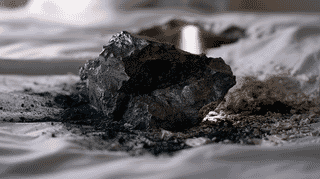
A team led by the Nagoya Institute of Technology has found that water vapor can accelerate bond exchange in vitrimers, a third class of plastic that could finally make 'unrecyclable' thermosets repairable and reusable.
When typhoons soak Mount Fuji, its summit rises a few centimeters and its base sinks. Hokkaido University researchers found this in satellite-positioning data, and it changes how Japan reads the volcano's eruption warning signs.
Waseda University and Fujitsu used quantum circuit learning (QCL) to predict the hardness of high-entropy alloys from only about 100 data points. We explain how a quantum approach tackles the small-data extrapolation problem that defeats conventional machine learning, where it sits against IBM and Google quantum efforts, and what it could mean for industrial materials discovery.
Seven months after metal-organic frameworks (MOFs) won the 2025 Nobel Prize in Chemistry, where does the technology actually stand? A status check on Atoco's air-to-water devices, scaled-up carbon capture by Svante and Kobe Steel, China's lead in MOF research output, and why an Atomis executive says a Nobel does not lower the hurdles.
A meniscus regeneration technology developed at Japan's Institute of Science Tokyo has been approved as Seibiscus, the country's first regenerative medicine product for meniscus injury. We explain how it uses a patient's own stem cells to repair the knee, what the Phase III trial showed, and how it compares with regenerative medicine ventures in South Korea and the US.
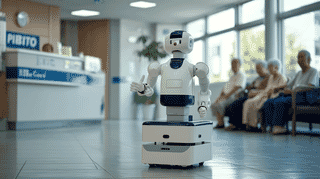
Kawasaki Heavy Industries—maker of jets, bullet trains and motorcycles—has opened a physical AI development hub in Silicon Valley, teaming up with NVIDIA, Analog Devices, Microsoft and Fujitsu. We unpack why a 130-year-old industrial giant is betting on AI that acts in the real world, and where Japan stands in the US-China robotics race.
Kumamoto University has built a world-first device that kills anisakis parasites in raw fish using a 30,000-volt pulse lasting one-millionth of a second, without freezing or cooking. A look at the food-safety tech behind Japan's sashimi culture.
OpenAI is moving to offer its newest cyber-focused AI model, GPT-5.5 Cyber, to the Japanese government and industry. Former NSA Director Paul Nakasone, now an OpenAI board member, flew to Tokyo to pitch critical-infrastructure cooperation. We unpack the contrast with Anthropic's tightly controlled Claude Mythos, the China-threat framing, and what it means that OpenAI wants Japan as its first international partner.
Two key Capcom executives explained their AI strategy to 4Gamer: 3,000 hours of QA collapsed to 72 hours by AI, 30,000+ hours of monthly autonomous playtesting, and a three-layer architecture combining Google's Gemini with Capcom's own art-director models. As the DLSS 5 backlash and ResetEra debates continue, here's why Capcom insists AI is for 'releasing creator potential', not making art.
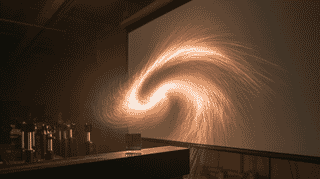
NHK STRL and Institute of Science Tokyo have built the world's first transparent hologram that floats full-color 3D images in front of clear glass. A new amplitude-aware design cracks the two old walls of surface-relief holography in one move.
Hoku Energy K.K., the Japanese subsidiary of UK-based Hoku Infrastructure, will build Japan's first new-build 100% hydrogen mono-firing thermal power plant in Aomori Prefecture. The 106.6MW Daiichi Plant, awarded under Japan's 3rd Long-Term Decarbonized Power Source Auction, is scheduled to start operations in the early-to-mid 2030s. We compare it with hydrogen power efforts by Plug Power, MHI in Utah, Linde, Air Liquide, and South Korea's Doosan, and explain what it means for Japan's GX strategy.