A Hirosaki University team made a hydrogel that is 70% water yet bounces like a superball. Swapping one end group from methoxy to hydroxyl raised its stiffness about twentyfold, pointing toward artificial cartilage and underwater cushioning.
Japan's SKYDRIVE eVTOL flew stably at 100 km/h, a speed that sounds modest but marks a key step toward type certification. We unpack why a compact, wingless multirotor is a deliberate bet, and how Japan stacks up against China's already-flying EHang and US rivals Joby and Archer.
Two nearly identical proteins, one sees red and one sees green, separated by just 30 nanometers. A Japan-led international team determined the dark-state atomic structures of the red and green cone pigments for the first time, revealing that three amino acids decide how we tell red from green. The story behind a long-standing mystery in color vision.
The Super-Kamiokande collaboration has caught the first-ever evidence of the diffuse supernova neutrino background, the combined glow of every massive star that has died since the universe began. Here is what it could reveal, and the spoonful of gadolinium that made it possible.
Damaged neurons were thought to be beyond repair. A University of Tokyo team led by Noboru Mizushima just challenged that in mice: switch the cell's cleanup system, autophagy, back on, and the protein junk clears, motor skills and memory return. A new angle on neurodegeneration from a disciple of Nobel laureate Yoshinori Ohsumi.
Researchers at Science Tokyo built a cheap biosensor that uses a plastic-binding peptide and surface plasmon resonance to detect nanoplastics in water, catching 50-nanometer polystyrene particles in 20 minutes, label-free. Here is why measurement, not the plastic itself, is the bottleneck regulators keep hitting.
NTT, the University of Tokyo, RIKEN and OptQC squeezed light to a record 10.1 dB, over 90% of its quantum noise gone. How a 1998 teleportation gamble became the core of Japan's optical quantum computer.
JAXA will launch the Michibiki No. 7 satellite on H3 Rocket No. 9 on August 7. A look at Japan's GPS-independent seven-satellite plan, the ASNAV system that aims to take phone accuracy from 5-10 meters to 1, how it compares with GPS, Galileo and BeiDou, and the satellite Japan just lost.
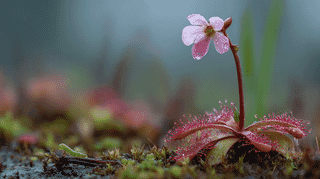
Say you can hear plants and people back away slowly. Turns out it's real: researchers at Japan's Institute of Science Tokyo built a transparent 70-nanometer carbon-nanotube electrode that reads a crop's bioelectric stress signals for up to 10 months, even in the rain.
RIKEN unveiled two supercomputers on the same day: RIKYU for AI for Science and ROQUO for quantum-HPC. Both are Japan's first to run GB200 NVL4 and Quantum-X800 InfiniBand. We compare them with US efforts like xAI's Colossus and the DOE Genesis Mission, and China, to read Japan's bet on purpose over scale.
HOKUSHIN-1, a cubesat from three Japanese universities, was deployed from the ISS on June 19. Why it proves deep-space tech in low orbit first, where failure is cheap.