Basic Research & Academia

Fundamental science from Japanese universities and national research institutes.

155 Articles in this topic
Technology

iPS Cell Corneal Regeneration: Japan's Reimei Launches World-First Clinical Trial of Donor-Derived Cell Sheet

Osaka University spinoff Reimei has launched the world's first corporate clinical trial of a corneal epithelial cell sheet made from donor-derived iPS cells. Learn how this breakthrough could solve the global corneal donor shortage, restore vision for millions, and where Japan's regenerative medicine regulation stands versus the US FDA.

Technology

Typhoon Rapid Intensification: Japan's Fugaku Supercomputer Achieves World-First 100-Meter Simulation

Japan's Fugaku supercomputer achieved the world's first 100-meter resolution simulation of an entire typhoon lifecycle, from initial vortex to super typhoon over 4 days. The breakthrough revealed tiny vortices invisible to conventional 2km models that delay rapid intensification by a full day, offering critical insights for improving typhoon forecasting in an era of climate change.

All155 stories in Basic Research & Academia

Newest first
Technology

Painless Vaccine Patch: Tokyo University's Microneedle Technology Could Replace Needles for COVID Immunization

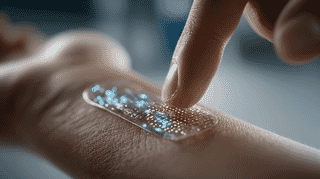
Researchers at the University of Tokyo and Tokyo Metropolitan Institute of Medical Science have developed a microneedle patch that delivers COVID-19 vaccines simply by sticking it on the skin. Using a 3D-printed pillar-guided design, the patch achieves 8.3x better loading efficiency and stronger immune response than injections in mouse trials. Explore how this painless, room-temperature-stable technology could transform global vaccination.

Technology

DIVE AI Workflow: How Japanese Universities Built an AI Team That Reads Scientific Charts and Discovers New Materials

Tohoku University and the University of Tokyo have developed DIVE, a multi-agent AI workflow that automatically reads and structures experimental data from scientific paper figures. By extracting over 30,000 data points from 4,000+ papers, the system proposed new hydrogen storage materials in just 2 minutes. Here's how this AI reading team is unlocking data trapped inside research charts.

Technology

Fuel Cell Breakthrough: Japanese Universities Develop Fluorine-Free Membrane with 100,000+ Cycle Durability

A joint research team from the University of Yamanashi, Waseda University, and Shinshu University has developed a completely fluorine-free electrolyte membrane for polymer electrolyte fuel cells. Achieving over 100,000 durability cycles—1.3 times that of conventional fluorine-based membranes—this PFAS-free breakthrough could accelerate the global hydrogen economy while addressing environmental regulations.

Technology

Migraine Prevention Breakthrough: CGRP Antibody Drugs Halve Symptoms in 50% of Patients, Keio Study Finds

A Keio University study reveals CGRP antibody drugs reduced migraine frequency by half in about 50% of patients, with over 90% satisfaction. Explore Japan's latest migraine prevention treatments—from monthly injections to upcoming oral medications and neuromodulation—and how they're transforming life for migraine sufferers.

Technology

5x Resolution CT Scanner: Kanazawa University Develops Device That Reveals Bone Microstructure

A research team at Kanazawa University has developed a next-generation X-ray CT scanner with 5x the resolution of conventional devices (0.08–0.1mm). Capturing images in just 6.5 seconds, this compact device can visualize trabecular bone structure, opening doors for early detection of trigger finger and osteoarthritis. We look at how 20 years of clinical experience led to it.