A black, sponge-like slab that floats with just lamp light has racked up 1.8 million views in a week. Developed at Nagoya University by Tomonaga Ueno, the carbon-nanotube aerogel is lighter than air and could quietly reshape EVs, eVTOL aircraft, drones and spacecraft. Here's how it actually works, and why the startup Sora Material thinks it's an industrial workhorse, not just a viral trick.
Researchers at Kyoto University used Japan's near-total medical insurance database to trace esotropia (inward-turning eyes) cases from 2014 to 2019, the years smartphones swept the country. Incidence rose from 32.26 to 36.61 per 100,000 person-years; surgeries climbed from 3,061 to 3,743. The link with smartphone penetration is strong, the absolute rise is small.
After a stroke, the brain repairs itself for about two months, then stops. A team from Science Tokyo, TMIMS, Kyushu University and Freiburg University has identified the protein responsible, ZFP384, and developed an antisense drug that keeps the repair window open in mice. Published in Nature, the discovery could redraw what is possible for stroke survivors and other brain injuries.
Tohoku University researchers have proven for the first time that microscopic surface roughness can reduce air drag by up to 43.6%, overturning an 80-year-old fluid mechanics consensus dating back to the 1940s. Here is what this discovery could enable for aircraft, cars, ships, bullet trains, and drones, and how it differs from riblets and golf ball dimples.
A Japanese research team led by Gakushuin University has discovered Mitorubin, a plant-derived compound that simultaneously increases mitochondrial quantity and function. The compound improved heart function in aged mice and extended median lifespan by about 40% in obese mice on a high-fat diet — a distinct approach from US longevity biotech, NAD supplements, and senolytics.
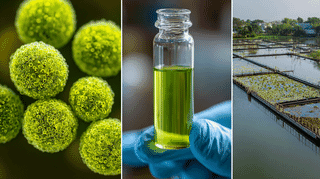
In 2012, the Sankei Shimbun reported a biofuel revolution centered on Enomoto algae, a hyper-growth Botryococcus bred by Kobe University spin-off G> under Professor Taira Enomoto. Heavy-industry giant IHI joined biotech venture Neo-Morgan Laboratory to commercialize it, with then-CEO Tomohiro Fujita declaring he wanted to cut the price to one-tenth within ten years. Fourteen years later, the joint venture has dissolved, but the algae fueled the world's first flight on SAF meeting ASTM D7566 Annex 7, and a Japanese-led 5-hectare facility in Malaysia is now the largest of its kind on Earth. Did the promise come true, or is the dream over?
Japan's next-gen supercomputer Fugaku NEXT bets against the cooling consensus: warming water above 30°C to cool AI servers and cutting cooling power by 20%. It may also adopt 'ZAM,' a new memory developed by SoftBank and Intel that stands DRAM chips on edge with magnetic-field coupling. Why Japan is choosing efficiency over the gigawatt-scale arms race that defines US Frontier and El Capitan.
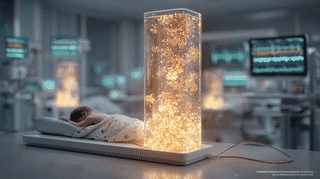
A Japanese team led by Prof. Takanori Takebe (Osaka & Science Tokyo) and Dr. Mureo Kasahara (National Center for Child Health and Development) plans the world's first pediatric clinical trial of UTOpiA, a bioartificial liver that perfuses blood through iPS-derived liver organoids. Animal trials showed 90% survival. How it compares with King's College London's HELP trial and Beijing's CiPS-BAL.
A Japanese team led by NAOJ has detected an atmosphere on a small trans-Neptunian object beyond Pluto for the first time, using a stellar occultation observed simultaneously from three sites across Japan. Here is how the pro-amateur collaboration worked, and why it rewrites textbooks on the outer solar system.
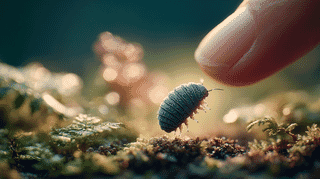
Researchers at the University of Tsukuba have discovered that pill bugs (Armadillidium vulgare) don't just incorporate the calcium carbonate they eat; they rebuild it from scratch inside their bodies, always producing calcite even when fed aragonite. The unexpected polymorph control reveals a deeper biomineralization mystery and may inspire next-generation biomimetic materials.
Researcher Yohei Kawai and Professor Shin Kaneko at Kyoto University's CiRA have established a way to induce helper T cells, the conductors of the immune system, from human iPS cells without mouse feeder cells. The paper ran in Molecular Therapy on January 20, 2026. Why this matters against the three structural limits of CAR-T therapy, and where Japan stands against Fate Therapeutics in the US and China's sheer trial volume.