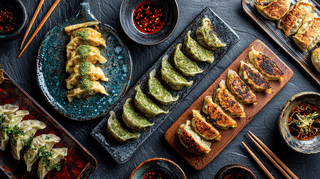
Osaka Ohsho, the 56-year-old Japanese gyoza chain, opens its first North American flagship in Sawtelle (Little Osaka), Los Angeles, on May 8, 2026. We unpack the Mitsubishi Shokuhin joint venture, the SNS-driven distribution strategy, the tableside cooking spectacle, and how the brand plans to flip gyoza from a ramen side dish into a main attraction.
On April 22, 2026, the world's first global matcha industry body launched in Tokyo. Led by 28-year-old tea master Ryo Iwamoto, the International Matcha Association (IMA) brings together the CEO of the Specialty Coffee Association, UC Davis tea scholars, and Future Food Institute to tackle counterfeiting and the absence of international standards in a $4.4 billion global market.
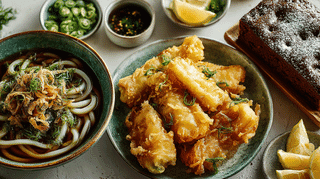
Otafuku Holdings subsidiary Nakagawa has completed a new tenkasu (tempura crumb) factory in Omura, Nagasaki, boosting output from 4,200 to 6,300 tons annually, a 1.5x jump aimed at Europe and beyond. A deep dive into what tenkasu is, how it powers okonomiyaki and udon culture, the rise of tempura crumbs in sushi rolls overseas, and how it compares to Britain's beloved chip-shop 'scraps'.
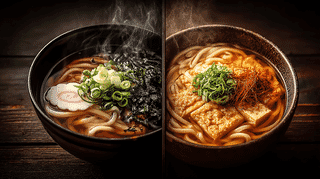
"Your broth is jet-black like motor oil!" "Yours is so pale you can see the bottom!" Japan's centuries-long East vs West udon war explained, soy sauce science, water chemistry, and a taste boundary discovered at Sekigahara.
The global matcha boom has reached even Kagawa, Japan's smallest prefecture famous for udon noodles. With a $31,000 research budget, Kagawa is exploring tencha production as green tea exports hit $450 million. Here's why the matcha gold rush now spans the entire country.
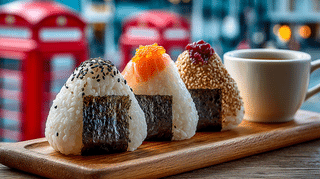
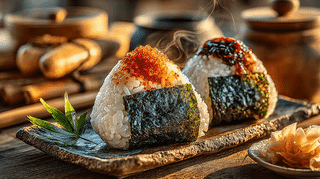
JR East, Japan's largest railway group, opened onigiri shop TOKYO ONIGIRI in London's Leicester Square in December 2025. Behind this unusual move, a railway company entering overseas food retail, lies the government's GOHAN Project strategy to boost Japanese rice exports. From Onigiri Summit 2026 to convenience store packaging innovations, we explore how the humble rice ball could become Japan's next global food hit after sushi and ramen.
Japan's green tea exports doubled to ¥72.1 billion in 2025, yet domestic matcha production can't keep up. As tea plantations shrink 29% in a decade and low-grade powdered tea floods global markets, the industry warns of 'matcha laundering.' Is the matcha in your latte the real thing?
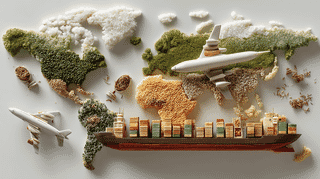
Japan's food exports hit a record $11.3 billion, but what systems make that possible? From 20 miso makers uniting at FOODEX to a $13 billion inbound food tourism pipeline, from onigiri startups promoting rice in Vietnam to a Toyosu-based platform targeting 100 cities worldwide, this is the story of the infrastructure behind Japan's food globalization.
Ippudo ramen now spans 400+ locations across 15 countries. Onigiri shops draw lines in Paris. Green tea exports hit a record $480 million. Natto exports surged 60x for some producers. Japan's 2025 food exports reached a record $11.3 billion. This is how Japanese food, far beyond sushi, is fundamentally reshaping dining tables worldwide.
As global matcha demand explodes, Kagoshima is building a $17M mega-factory, Ibaraki is subsidizing new entrants, and Shizuoka is pivoting from sencha. Inside Japan's matcha production arms race.
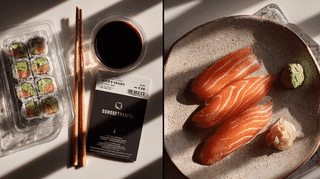
Takeout sushi sales at U.S. supermarkets have surged to $2.8 billion. Kroger sells over 40 million sushi packs annually, while NYC omakase spots charge over $1,000 per person. We break down the two-tier sushi economy reshaping how America eats Japanese food.