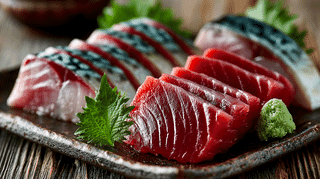
Kumamoto University has built a world-first device that kills anisakis parasites in raw fish using a 30,000-volt pulse lasting one-millionth of a second, without freezing or cooking. A look at the food-safety tech behind Japan's sashimi culture.
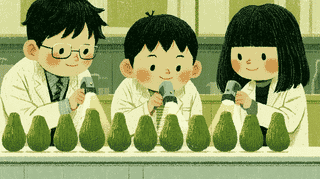
Akita Prefectural University students nicknamed the 'Avocado Squad' published a method that predicts avocado ripeness from skin reflectance and storage temperature, with no slicing required. The work is patent pending and the team is seeking commercial partners.
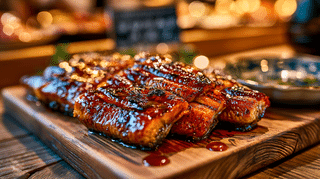
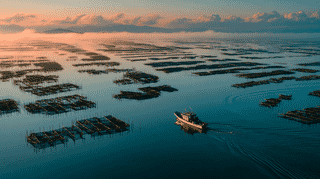
Yamada Suisan and Japan's fisheries research agency put fully farmed eel on public sale for the first time on May 29. After cutting glass-eel production cost from 40,000 to 1,800 yen, the country aims to end wild-juvenile dependence by 2050.
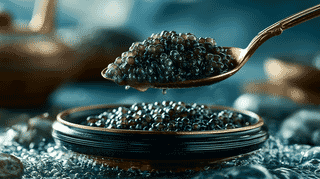
Caviar's definition of 'best' has shifted from geography to aquaculture technology. As China supplies 60% of the world's farmed caviar and Russian product disappears under sanctions, a landlocked Japanese prefecture is challenging the global hierarchy with a hybrid land-based farming system that combines patented closed-loop tech with rare ultra-soft spring water.
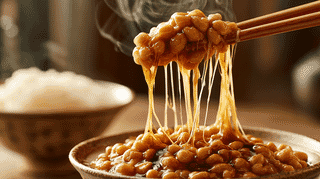
Hokkaido Hamanasu Foods, a natto maker in Ebetsu, has grown its exports 60-fold in eight years, almost entirely to China, where Beijing supermarkets stock Japanese-labeled four-pack sets that take 80% of shelf sales. Prefecture-wide natto exports hit 640 million yen in 2025, five times the level seven years earlier. Back home, Mizkan suspended four natto products in May 2026 as Middle East tensions disrupted packaging supplies. Plus: the science of Bacillus subtilis and where to buy natto abroad.
Sushiro, the king of Japan's revolving sushi industry with 14 consecutive years as the top earner, is finally making a real run at the US market. The Times Square flagship opens this fall, but rival Kura already runs 91 US restaurants and is listed on NASDAQ. Inside Japan's three-way sushi war and Sushiro's last frontier.
With matcha scarce and prices soaring, an unglamorous Japanese herb called yomogi (mugwort) is being talked up as the next matcha. One Osaka supplier shipped a record 754 tons in 2025 and expanded cultivation 1.5x, while mugwort-steam salons grew 1.8x in three years. A trading-company veteran turned mugwort farmer is now branding the weed.
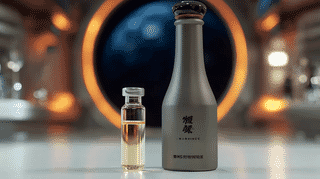
Yamaguchi's premium sake brand Dassai and Japanese engineering giant Mitsubishi Heavy Industries brewed sake in space for the first time in human history. The result was a single 100ml bottle, priced at about $700,000, and it sold. Inside the Dassai MOON Project, the long-term plan to build a brewery on the Moon, plus practical brewery-tour information for visitors to Iwakuni, Yamaguchi.
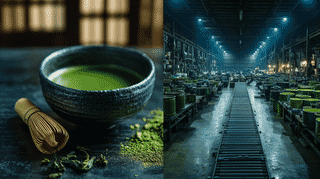
Global matcha production has roughly doubled in just five years. Japan can no longer meet world demand alone, and Chinese matcha is rapidly filling the gap. Should matcha be defended as Japanese cultural heritage, or embraced as a global beverage? We explore the strategic crossroads facing Japan's matcha industry.
Once dismissed overseas as resembling 'black paper,' nori is now riding the global onigiri boom into kitchens worldwide. A 3-Michelin-star Italian chef uses nori pesto on cuttlefish, and the global market is projected to grow from $3.8B in 2025 to $6.4B by 2034. From the famous 2010 Nature paper behind the 'only the Japanese can digest nori' claim, to Japan being overtaken by Korea in production volume, here's how Japanese seaweed conquered the world.
Japan is famously polytheistic and its gods rarely clash, unless the subject is mushroom-shaped versus bamboo shoot-shaped chocolate snacks. Inside the 50-year rivalry between Meiji's Kinoko no Yama and Takenoko no Sato: national elections, a celebrity-led campaign, a peace treaty, and why this debate can break friendships.