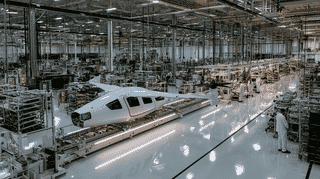
Toyota and America's Joby Aviation are setting up a California joint venture to mass-produce eVTOL air taxis, with Toyota holding 51% and Joby 49%. Now that the flying is largely solved, the race hinges on whether anyone can build these aircraft cheaply and at scale. Here is why Toyota's production system is the bet, how China pulled ahead, and why Europe's pure-play startups collapsed.
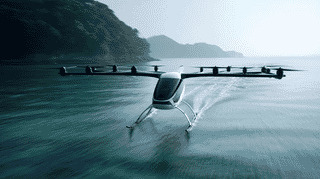
Japan's SKYDRIVE eVTOL flew stably at 100 km/h, a speed that sounds modest but marks a key step toward type certification. We unpack why a compact, wingless multirotor is a deliberate bet, and how Japan stacks up against China's already-flying EHang and US rivals Joby and Archer.
Dynamic Map Platform, known for self-driving HD maps, now sells North American road authorities a bridge and tunnel clearance solution. We explain the 15,000 annual bridge strikes, the new SNBI standard, and how it compares with existing U.S. services.
At Nissan's annual meeting, at least one investor called to bring back Carlos Ghosn. The fugitive ex-chairman told Reuters that only he can save the company, but he fled Japan inside a box and cannot legally return. What the absurd pitch actually signals.
Nissan shareholders voted down the reappointment of outside director Motoo Nagai. A Mizuho-linked board insider, an abstaining Renault, and executive pay in a loss-making year explain how a rare rejection happened.
Honda's full-scale eVTOL demonstrator, designated F1, completed its first flight in the US, hovering for about 90 seconds. Instead of going all-electric, Honda chose a gas-turbine hybrid built for 400km-plus intercity range. Here's the contrarian bet, and the F1 and HondaJet technology behind it.
In May 2026 Toyota canceled the Lexus LF-ZC, its next-gen EV—but it killed the car, not the tech. Why investment in gigacasting and solid-state batteries continues, compared with Tesla's own gigacasting retreat.
On May 29, 2026, Mitsubishi unveiled a mid-to-long-term vision reviving the Pajero after seven years and turning it into a series. With a ~1 trillion yen ($6.3B) investment, a hybrid pivot, and Nissan-built US vehicles to dodge tariffs, the comeback rides a global wave of heritage-SUV revivals.
China's Chery and Japan's Autobacs are among five companies behind EMTA, a new kei-class EV brand planned for 2027. Why Japan's open market looks nothing like the US or EU.
Mazda launched the third-generation CX-5 in Japan on May 21, 2026, starting at 3.3 million yen (around $20,800). With 5 million sold globally, this redesigned SUV is Mazda's bet on hybrids and combustion as the EV boom cools, and how it stacks up against Toyota RAV4, Honda CR-V, Tesla, and BYD.
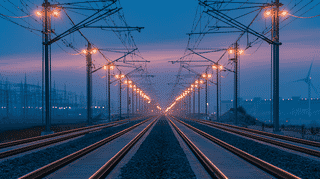
Hokuriku Electric has broken ground on a 2,000 kW hydropower plant in Komatsu, Ishikawa, the first in Japan dedicated to a bullet train. All output will flow to JR West under an offsite PPA. How does Japan's decarbonization push compare with SNCF and Deutsche Bahn?