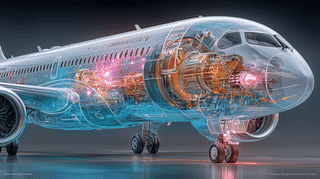
Toshiba Energy Systems, Airbus, and Toyota are racing to commercialize superconducting motors that promise 10x the power density of conventional motors. Dubbed the 'ultimate motor,' the technology enables hydrogen aircraft and hydrogen-engine cars while leveraging Japan's decades of niche superconductor expertise. As eVTOL startups falter, why is Japan's aviation motor technology suddenly central to the global decarbonization race?
Honda will end four-wheeler sales in South Korea by the end of 2026, closing a 23-year chapter with cumulative sales of just 108,600 cars. The retreat coincides with China factory shutdowns from June 2026, the cancellation of the Sony-Honda AFEELA EV, and scrapped North American EV plans, part of a sweeping strategy to concentrate resources on the US, Japan, India, and ASEAN. A deep dive for global readers.
On April 14, 2026, the headline from Nissan's long-term vision wasn't rare earths or robotaxis, it was the return of the Skyline, the continuation of the GT-R, the revival of the Xterra, and the debut of the all-new X-Trail/Rogue e-POWER and Juke EV. Here's Espinosa's 56-to-45 model cull, the new 'Heartbeat' classification, and how Japan, the US, and China each get distinct lineups as Nissan walks a standalone path after the Honda merger collapse.
Waymo and Toyota have agreed to explore bringing L4 robotaxi technology to personally owned vehicles. We unpack how Waymo's sensor-heavy approach differs from Tesla's camera-only FSD and China's Baidu Apollo, and what this means for Toyota's strategic direction.
In the world's 3rd largest auto market, Japanese brands hold 50% share. We break down Maruti Suzuki's 40% dominance, the rise of Tata and Mahindra, and how Japanese makers are navigating India's EV transition.
A rigorous evaluation of Nissan's triple strategy against a global EV slowdown. With Trump's tax credit repeal, China's sales slump, Honda canceling its 0 series, and BloombergNEF cutting EV forecasts by 14 million units, is this Nissan's genuine breakthrough or just the fifth failed long-term plan in six years? Surprisingly, the EV slowdown might actually be a tailwind for Nissan. Here is why.
JR Kyushu's new RK System will control trains over public cellular networks starting 2028—a Japan-first approach. How it compares to Europe's ERTMS and America's PTC, and what it means for aging societies everywhere.
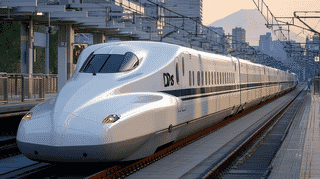
JR Central reveals 'Doctor S', the successor to the beloved Doctor Yellow inspection train. Based on the N700S Shinkansen, it will start service in October 2026 and take over track-testing duties from January 2027. Here's why Japan runs dedicated inspection trains and how you might still spot the new yellow logo.
Honda faces its first-ever annual loss since going public in 1957, with up to $15.7 billion in EV-related write-downs. Three flagship EVs cancelled, Sony-Honda AFEELA scrapped, and China sales declining for 25 straight months. We break down the crisis, analyze Honda's hybrid pivot and May 2026 strategy reveal, and share Japanese and global reactions.
An in-depth look at Woven by Toyota, the software subsidiary steering Toyota's transformation. From the Arene platform's debut in the new RAV4 to the $1B Woven City experiment, we analyze how Toyota is fighting Tesla and BYD in the SDV era.
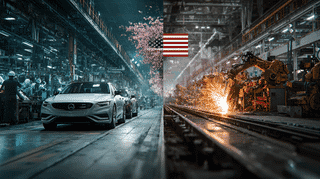
Trump tariffs triggered a massive production shift by Toyota, Honda, Nissan, and Subaru from Japan to the US. With $35 billion in annual tariff costs industry-wide, we explore each maker's strategy, the impact on 5.5 million Japanese jobs, and how this echoes the 1980s trade wars.