Why a Nissan deep in restructuring picked Red Hat for its next-generation in-vehicle OS. We unpack the trap of in-house software development that cost Volkswagen's CARIAD 14 billion euros, and the path Nissan chose to avoid it.
Honda reported a 423.9 billion yen net loss for the year to March 2026, its first since listing in 1957, alongside 1.58 trillion yen in EV-related charges, most of them non-cash. The same day it unveiled a turnaround plan: 15 new hybrids by FY2029 and a 1.4 trillion yen operating profit target. We set it against Toyota's multi-pathway bet, the Tesla and BYD lead changes of 2026, and Hyundai-Kia's quiet rise.
Subaru cut its FY2026 operating profit forecast by 900 billion yen to just 40 billion yen, a 90% year-on-year plunge announced May 11. Beyond US tariffs, a North American cold wave, Middle East shipping disruptions, and EV asset impairment from Trump's environmental rollback all hit at once. Why does Subaru—with 80% North America sales reliance—suffer most among Japanese automakers?
Honda's Zero EV brand launches its first model—the 0 Alpha compact SUV—in India by early 2027, exporting back to Japan. After cancelling three North American EVs and posting record losses, Japan's #2 automaker is betting on Rajasthan over Ohio. We unpack the gamble, the rivals waiting in India, and why this could rewrite Japanese EV strategy.
JR East launches Japan's fastest and longest Level 4 autonomous bus on May 29, 2026, on the tsunami-rebuilt Kesennuma BRT in Miyagi Prefecture: 60 km/h top speed and 15.5 km route, both national records. As China's Baidu and Waymo race ahead with city robotaxis, Japan is taking a quieter, magnet-marker path on dedicated bus corridors.
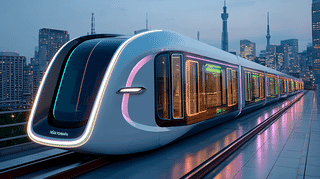
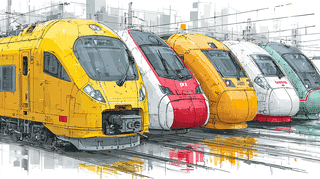
JR East has unveiled a concept render for the next-generation 'sustina' commuter train, and it looks nothing like the iconic Yamanote Line trains running today. Featuring autonomous control and 'emotional graphics,' the design reimagines what a Tokyo commuter train can be. Here's why Japan's commuter trains are a global obsession.
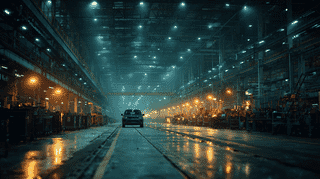
Nissan, in the midst of its Re:Nissan recovery plan, will cut about 900 European jobs (10% of the regional workforce) and consolidate two production lines into one at its UK Sunderland plant. With utilization at roughly 50%, China's Chery is in talks to take over the freed-up line. We unpack what this means alongside Volkswagen and Stellantis restructuring, against the backdrop of Chinese EV pressure squeezing Europe's auto industry.
Why JR Central chose a standard white livery for Doctor S, the successor to the legendary yellow inspection train. Inside the official reasoning, the meaning of yellow in Shinkansen color codes, how inspection trains look in other countries, and where to photograph the new Doctor S along the Tokaido line.
Nissan revised its FY2026 operating outlook from a 60-billion-yen loss to a 50-billion-yen profit. The 110-billion-yen swing reflects cost cuts, yen weakness, and a one-off provision reversal tied to the US repealing its greenhouse-gas vehicle rule. Net loss still expected at 550 billion yen for a second straight year of red ink.
Mitsubishi Electric is in talks to transfer 50% of its $4.3B auto parts subsidiary to Taiwan's Foxconn, with a deal expected by May. As BYD captures 19% of the global EV market, how is Japan's auto supply chain being reshaped?
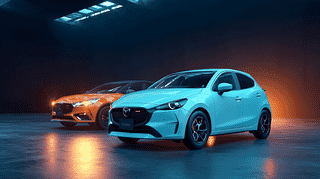
Mazda will end domestic production of its signature compact car Mazda2 (formerly Demio) at the end of August 2026. We explore the 30-year legacy of the car that saved Mazda from bankruptcy in the 1990s, and what this means for Japan's shrinking compact car market.