Mobility & Automotive

The auto industry, EVs, batteries, hydrogen and next-generation mobility.

69 Articles in this topic
Technology

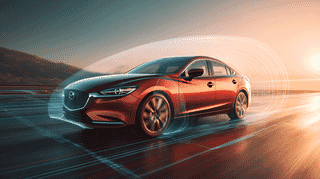
Wireless EV Charging While Driving: DENSO and University of Tokyo Launch 10-Year Plan to Redefine Mobility

DENSO and the University of Tokyo signed a 10-year partnership starting April 2026 centered on Dynamic Wireless Power Transfer (DWPT). Learn how charging EVs while driving could shrink batteries, cut costs, and reshape energy infrastructure — plus how Japan's approach compares to Sweden, Israel, and the US.


All69 stories in Mobility & Automotive

Newest first
Business & Economy

Honda's Historic $43 Billion Loss: EV Strategy Reversal Kills Honda 0 Series and Signals Industry-Wide Reckoning

Honda announces its first-ever net loss since going public, with losses of up to $43 billion from scrapping three North American Honda 0 Series EVs, acquiring LG battery joint venture assets, and writing down Chinese operations. With cumulative losses potentially reaching $157 billion, this signals a seismic shift in Japan's EV strategy. Analysis covers Toyota's hybrid vindication, the failed Nissan merger, executive pay cuts, and what it means for the global auto industry.

Business & Economy

EV Boom Stalls: Why Toyota and Honda Hybrids Are Making a Global Comeback in Thailand, China, and Europe

Thailand's BEV sales turned negative in 2024 while hybrid sales surged nearly 50%. Falling resale values, thin charging infrastructure and retreating Chinese brands exposed the limits of the EV boom. As markets from Bangkok to Berlin recalibrate, Toyota and Honda's multi-pathway strategy looks better than it did. A data-led look at the EV slowdown across Thailand, China and Europe.

Technology

Fuel Cell Breakthrough: Japanese Universities Develop Fluorine-Free Membrane with 100,000+ Cycle Durability

A joint research team from the University of Yamanashi, Waseda University, and Shinshu University has developed a completely fluorine-free electrolyte membrane for polymer electrolyte fuel cells. Achieving over 100,000 durability cycles—1.3 times that of conventional fluorine-based membranes—this PFAS-free breakthrough could accelerate the global hydrogen economy while addressing environmental regulations.