Kao, famous for Biore and Attack, has brought its first overseas semiconductor cleaning center online in Hsinchu, Taiwan. Ajinomoto, the MSG maker, is putting over 25 billion yen into ABF insulation films that hold nearly 100% global share, and has bought land in Gifu for a third plant. How Japanese consumer goods companies, alongside Shin-Etsu, SUMCO, JSR and TOK, became indispensable to the AI chip supply chain, and how they compete with US, European, Korean, Taiwanese and Chinese rivals.
On April 28, 2026, the day Denso formally withdrew its acquisition proposal for Rohm, Mitsubishi Electric CEO Kei Uruma declared he wants to spin off only the power semiconductor businesses of all three companies and form a joint venture. This proposes a different framework from Rohm and Toshiba's full semiconductor integration plan, adding a new wrinkle to the world No.2 alliance vision. We analyze competition with Wolfspeed, Infineon, and STMicroelectronics, the SiC market share battle, and the impact on the EV industry.
Fujitsu is doubling down on its sovereign AI strategy with the FUJITSU-MONAKA CPU series, choosing Rapidus as a manufacturing partner and 'coexisting' with NVIDIA's GPUs rather than competing. We compare Japan's hybrid approach to China's fully autonomous Loongson (LoongArch) and Europe's Arm-based SiPearl, revealing how Japan's pragmatic balance defines a third path in global chip sovereignty.
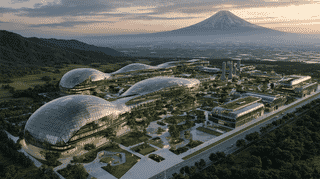
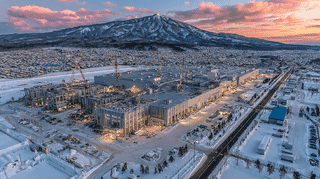
Kumamoto Prefecture, Koshi City and Mitsui Fudosan signed a partnership agreement on April 27 to launch a 31-hectare 'Kumamoto Science Park' core hub — modeled on Taiwan's Hsinchu — to anchor Japan's semiconductor revival around TSMC's 3nm Kumamoto fab by 2030. We compare it with the US CHIPS Act and EU Chips Act, and unpack the land-price spikes and labor crunch already reshaping the region.
Resonac, the world's top supplier of back-end semiconductor materials, has fully launched US-JOINT, a 12-company Japan-US consortium R&D center in Union City, California. The goal: cut proof-of-concept cycles from six months to one, and plug directly into the custom AI chip development of GAFAM-class hyperscalers.
Three weeks after the March 27 three-way merger announcement, Japan's power semiconductor reshuffle has accelerated. Denso declared its semiconductor-maker ambitions in CORE 2030, Rohm's CEO asserted leadership, Toshiba eyes re-listing, and Mitsubishi Electric opened a new Fukuoka plant. A timeline update.
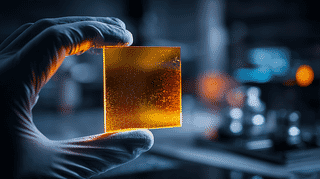
Tokyo-based Orbray has produced the world's largest 30mm square (111) freestanding diamond single-crystal substrate, leaping from the previous few-millimeter limit. The twin-suppression breakthrough, published in Applied Physics Express, unlocks NV-center quantum sensors and next-generation power semiconductors.
Japan's METI officially approved an additional $4 billion for Rapidus, bringing total government support to $15 billion. We analyze Japan's 2nm chip ambitions alongside the US CHIPS Act, EU Chips Act, TSMC's Kumamoto expansion, and the critical challenge of finding customers.
The shutdown of Qatar's LNG facilities due to Middle East conflict has wiped out 30% of global helium supply. Without helium, dry etching, essential for all advanced chips, physically cannot function. South Korea's memory makers face a 5-month countdown, and the U.S. no longer has a strategic reserve to cushion the blow.
Ritsumeikan University startup Patentix raised $1M in Series A1 funding to accelerate germanium dioxide (GeO2) power semiconductor development, a next-gen material that could outperform SiC and GaN.
AIST developed a voltage-induced static magnetization switching method using artificial antiferromagnets, enabling stable writing across a wide pulse-width range for voltage-driven MRAM. Published in Nature Materials, this breakthrough could lead to ultra-low-power memory for AI and IoT devices.