Kyoto University's AI-powered robot monk Buddharoid now offers spiritual guidance at a Kyoto temple, trained on ancient Buddhist scriptures. With 30% of Japan's 77,000 temples projected to vanish by 2040, can artificial intelligence save Buddhism? From the $1M Mindar android to BuddhaBot chatbots reaching Bhutan, we explore where faith meets technology.
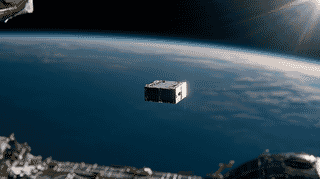
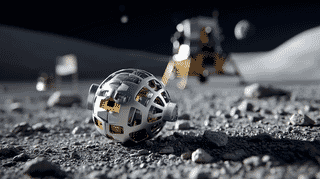
Japanese lunar startup ispace has unveiled 'Lunar Connect,' a communication and positioning service using lunar orbiting satellites. Partnering with KDDI for ground stations and planning 5 satellites by 2030, ispace is pivoting from a transport company to a space infrastructure provider. The new unified ULTRA lander marks another strategic shift.
Tokyo deep-tech startup H.I.Council has performed the world's first 108-qubit FeMoCo calculation on IBM's Heron r2 processor. While achieving chemical accuracy via classical methods, the team discovered a quantitative hardware limit they call the 'coherence wall' — a constructive finding for quantum hardware development.
Researchers at Utsunomiya University have provided the world's first direct proof that ceramide deficiency in the skin causes atopic dermatitis. Using transgenic mice, they demonstrated the full disease cascade from barrier breakdown to allergic inflammation — opening doors for ceramide-based therapies and enzyme-targeting treatments for the 200+ million people affected worldwide.
RIKEN and Osaka University have launched cloud access to Ei-II, a domestically developed 144-qubit superconducting quantum computer. Doubling the previous 64-qubit Ei, the 28x28mm chip enables quantum calculations beyond classical simulation. We compare it with IBM and Google systems and examine Japan's quantum roadmap.
TOPPAN Holdings, Japan's NICT, and Canada's ISARA have demonstrated a seamless migration path from current cryptography to post-quantum cryptography in certificate authority systems, without service disruption. The breakthrough addresses the looming quantum computing threat to existing encryption, targeting real-world deployment in healthcare, finance, and government by 2030.
Japanese researchers cloned mice from a single donor for 20 years, producing over 1,200 animals across 58 generations. After the 27th generation, lethal mutations accumulated until all 58th-generation clones died within days of birth — the first proof that mammal cloning has a hard biological limit.
Japan's iCELL BANK launched in April 2026, offering individuals the ability to create and cryopreserve their own iPS cells for future regenerative medicine. Using ID Pharma's Sendai virus vector technology, the service marks a new phase in commercializing the Nobel Prize-winning iPS cell technology for everyday consumers.
Japan's QST and NTT achieved a world-first: real-time communication under 100 microseconds for fusion plasma control. Learn how this JT-60SA breakthrough connects to IOWN and ITER.
SoftBank Group is betting big on Physical AI, merging telecom infrastructure with robotics. From its $5.4B ABB acquisition to AI-RAN partnerships with NVIDIA, Arm, and Yaskawa, here's how Japan's tech giant plans to make robots think and move in real time.
ispace's Improvement Task Force, co-chaired by MIT and Keio professors, has released 7 recommendations after analyzing two failed lunar landings using CAST methodology. With the new integrated ULTRA lander, JAXA SLIM technology transfer, and restructured missions through 2030, ispace is emerging as a role model for how space startups can learn from failure.