SoftBank subsidiary SAIMEMORY partners with Intel to develop ZAM (Z-Angle Memory), a next-generation memory technology targeting 2-3x the capacity of HBM at half the power consumption. Discover how this revolutionary vertical stacking architecture aims to disrupt the Korean-dominated AI memory market and revive Japan's semiconductor legacy.
Shimizu Corporation's world-class SEP vessel "BLUE WIND" has arrived in Maizuru, Kyoto. Learn about this massive 142m construction ship with 2,500-ton crane capacity and Japan's offshore wind power development projects.
A 117-year-old Meiji-era prison designated as an Important Cultural Property has been transformed into HOSHINOYA Nara Prison, which opened June 25, 2026. Experience luxury suites created by connecting solitary cells of about 5㎡ each, starting at $1,000/night. Discover Japan's first prison hotel.
Singapore startup Flint begins mass production of biodegradable paper batteries. Made from cellulose, decomposing in 6 weeks, with no lithium or cobalt. Pilot programs with Logitech and Amazon underway, AA/AAA formats expected in 2026. Could this be the solution to battery waste?
Discover why Japan's road markings like "STOP" signs aren't painted with regular paint, but created using special thermoplastic resin melted at 180-200°C. Learn about its 3-minute drying time in winter, glass bead reflectivity for night visibility, and the skilled craftsmen who work as "human printers" to apply it.
UTokyo Matsuo Lab spinoff Akari raises ¥5 billion ($33M) from Mitsubishi Electric, reaching ¥100 billion+ valuation. Learn how this 5-year-old AI startup achieved profitability from day one, partnered with 1,000+ companies, and is building the "next-generation industrial OS" for Japan's manufacturing sector.
Discover how Japanese food giant Ajinomoto dominates the global semiconductor market with its ABF insulating material. Learn the surprising story of how amino acid manufacturing expertise became essential for cutting-edge CPU production.
Japanese startup AirKamuy has developed a cardboard military drone priced at just $2,000—one-tenth the cost of conventional fixed-wing UAVs. The AirKamuy 150 assembles in 5 minutes, flies at 120 km/h for 2 hours, and is attracting attention from Japan's Ministry of Defense and Coast Guard. How is this disruptive innovation reshaping defense technology?
Mitsubishi Electric and Kyoto University have made a world-first discovery: graphite material that heals itself. HOPG's deformation resistance recovered from 41% to 97% within just 7 days. This breakthrough could revolutionize MEMS sensors in smartphones, wearables, and autonomous vehicles. A look at Japan's cutting-edge materials science.
Japan's perovskite solar cell market is projected to surge to nearly $26 billion globally by 2040, with key materials exceeding $9.5 billion. This flexible, lightweight technology invented in Japan could revolutionize renewable energy by enabling installation on walls, windows, and curved surfaces previously impossible for traditional solar panels.
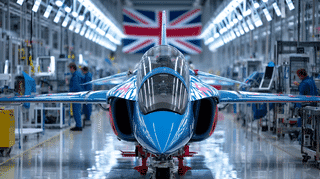
UK aerospace startup Aeralis is developing a modular jet trainer that could succeed Japan's aging T-4 aircraft. With interchangeable components enabling basic to advanced training in one platform, and potential ties to GCAP cooperation, this innovative British design may transform pilot training worldwide.