When typhoons soak Mount Fuji, its summit rises a few centimeters and its base sinks. Hokkaido University researchers found this in satellite-positioning data, and it changes how Japan reads the volcano's eruption warning signs.
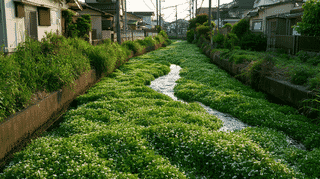
A paddy field in central Japan was swallowed by bright yellow flowers. Water primrose, a South American invader, regrows from the tiniest stem fragment. We look at why farmers cannot kill it, how the same plant is wrecking waterways in France, Britain and the US, and why eradication may be impossible.
At the APEC trade ministers meeting in Suzhou, China, Japan's industry minister demanded that exporting countries rectify arbitrary rare earth curbs. A look at the slow squeeze on Japan, its roots in a Taiwan remark, and Tokyo's exit strategy.
Eleven days, 44 countries, 400 delegates. We score the five expectations from our pre-meeting article against the MOFA outcome communique: emperor penguin protection blocked, tourism rules deferred, Annex VI stalled, only the transparency resolution delivered.
Roadkill of the Amami black rabbit, a 'living fossil' found only on two southern Japanese islands, hit a record 185 in 2025. The grim milestone is a side effect of Japan's celebrated invasive-species eradication programs — including a 24-year mongoose campaign declared complete in 2024.
A Japanese research team — University of Tokyo, JAMSTEC, and the National Institute of Polar Research — has produced the first direct observational evidence that warm-water microbes carried into the Arctic Ocean are altering its nitrogen and phosphorus cycles. Aboard the R/V Mirai between 2015 and 2020, they tracked how UCYN-A2, a nitrogen-fixing organism normally associated with subtropical seas, surged into the Arctic basin during the early ice-melt year of 2017 — and why that matters for the world's most rapidly warming ocean.
A black clay layer in a remote Hokkaido stream — more than 10,000 km from the Yucatan impact crater — holds chemical fingerprints of the asteroid that ended the age of dinosaurs. Tohoku University researchers are re-analyzing East Asia's only known K-Pg boundary outcrop.
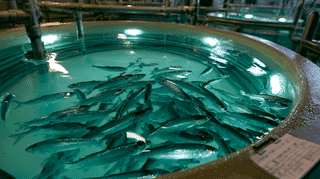
Japan's Fisheries Agency will sell fully farmed eel to the public for the first time on May 29. After cutting glass-eel production cost from 40,000 to 1,800 yen, the country aims to end wild-juvenile dependence by 2050.
Brazilian Foreign Minister Mauro Vieira visited Japan on May 17–19 for the inaugural Japan-Brazil Foreign Ministers' Strategic Dialogue. Here's what oil-dependent Tokyo wants from South America's resource giant amid the Hormuz crisis.
On May 17, 2026, Empress Masako waved goodbye to a polar bear at Tobe Zoo in Ehime, telling her 'I hate to leave.' Meet Peace, the 26-year-old 'miracle bear' who became Japan's first successful hand-raised polar bear — and the keeper who took her home to live with his family.