Japan's ruling LDP has asked the government to build a dedicated rare earth mining vessel for ~100 billion yen ($640M) at Minamitorishima, handing the proposal to Prime Minister Takaichi on June 12, 2026. Why JAMSTEC's Chikyu isn't enough, the roadmap from the February 2027 demonstration test to FY2028 industrialization, and how Japan's approach compares with the US, EU and Australia.
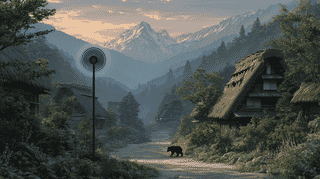
In April 2026, all six Tohoku prefectures issued their earliest-ever bear alerts. A fatal attack in Iwate, Aomori's first urban emergency hunting in Hachinohe. Meanwhile, Shirakawa-go deployed 10 'Bear Sonic' units emitting a chalkboard-scratching sound. In Toyama, sightings dropped to zero for a year after installation. Can this Japanese acoustic technology save the day?
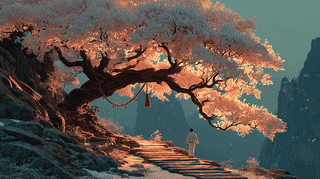
Frass discovered on a wild cherry tree at Yoshinoyama, Nara—home to 30,000 sacred cherry trees revered for 1,300 years—has been confirmed as damage from the invasive red-necked longhorn beetle. The first such case in any Japanese national park. A story at the intersection of invasive species, climate change, and cultural heritage.
Japan's vacuum equipment leader ULVAC is reshoring production of vacuum melting furnaces for rare earth magnets, with orders from US and European manufacturers projected to roughly triple. With over 70% global share in continuous vacuum furnaces, Japan's equipment dominance becomes a geopolitical asset.
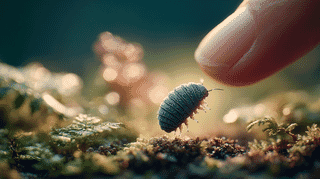
Researchers at the University of Tsukuba have discovered that pill bugs (Armadillidium vulgare) don't just incorporate the calcium carbonate they eat; they rebuild it from scratch inside their bodies, always producing calcite even when fed aragonite. The unexpected polymorph control reveals a deeper biomineralization mystery and may inspire next-generation biomimetic materials.
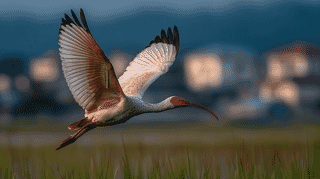
On May 31, 2026, Crested Ibises were released in Hakui City, Ishikawa, the first wild release on Honshu in 56 years. Crown Prince Akishino and Princess Kiko attended, returning to a milestone they witnessed in 2008 on Sado Island. The release is also a symbol of recovery from the 2024 Noto Peninsula earthquake. We compare this revival story with the California Condor and Korean Oriental Stork programs.
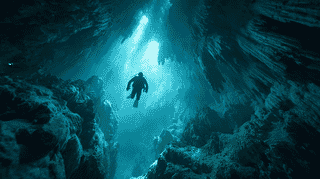
At Inazumi Underwater Cave in Oita Prefecture, professional diver Yuji Ohama (60) and his team reached 97.4m depth on March 20, 2026, likely a Japanese national record for underwater limestone caves. Formed 300 million years ago and submerged by an Aso volcanic eruption 85,000 years ago, the cave's deepest section revealed primordial stalactites and geological strata never seen above ground. We compare this discovery with Mexico's cenotes and Florida's cave systems, and explore Japan's only commercially diveable underwater limestone cave.
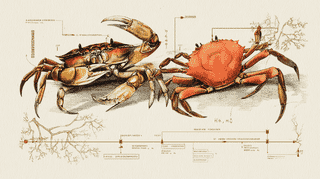
When did crabs start walking sideways? A Japan-US-Taiwan team led by Nagasaki University filmed 50 species and mapped them onto a phylogenetic tree, finding that sideways walking evolved just once around 200 million years ago, published in eLife.
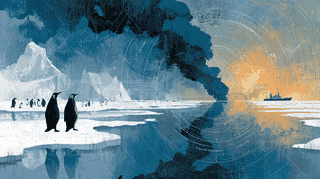
Tourist numbers up from 5,000 to 120,000 a year, sea ice at record lows, emperor penguins now Endangered. What ATCM48 in Hiroshima settled, and what it left unresolved.
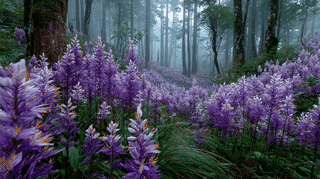
In central and southern Nagano, the dwarf bamboo Suzutake has begun a mass flowering said to occur roughly once every 120 years. The last record in northern Kamiina was 1906. The interval comes from old documents that logged "bamboo rice" harvests during famines, though the prefectural forestry centre says the exact cycle is still unknown and another mass flowering was recorded in 2017. Predator satiation, the risk that nothing regenerates afterwards, and how this compares with India's Mautam famine.
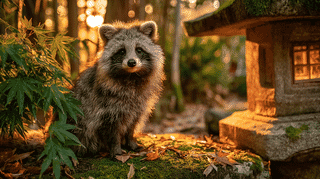
Tanuki Marugoto BOOK hit #1 in twelve Amazon Japan categories on pre-orders alone before its May 1 release, and topped Rakuten Books' daily ranking. Shigaraki pottery and its eight lucky aspects, Studio Ghibli's Pom Poko, Tom Nook in Animal Crossing, and a single social post about a defeated-looking tanuki with 96.5 million views. Why this animal is loved across so many cultural layers in Japan, explained for readers who keep mistaking it for a raccoon.