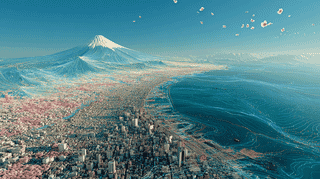
Japan had FIVE earthquakes of intensity 5 or higher in April 2026, including a magnitude 7.7 offshore Sanriku quake. Casualties: zero deaths, zero collapses. How? The 1981 building code, a 21-story 'fortress' built to survive a magnitude 8 hit, and one counterintuitive rule: don't run outside. A humorous look at the world's most earthquake-hardened country.
A JAMSTEC-University of Tsukuba team has discovered self-replicating circular RNA replicons living in 70-80°C Japanese hot springs. These newly found members of the Obelisk superfamily, a mysterious RNA entity first described by Nobel laureate Andrew Fire in 2024, expand our view of RNA-based life and may offer fresh clues to the RNA world hypothesis on the origin of life.
Ainoshima, a tiny island off Fukuoka, is home to roughly 200 cats that outnumber its 270 human residents. Named one of CNN's top 6 cat spots worldwide, this heart-shaped island is going viral again on TikTok and Instagram in spring 2026. Discover the fishing village coexistence, TNR efforts, and how to visit.
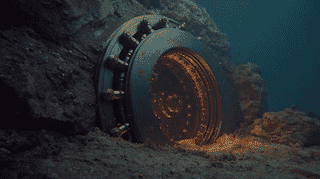
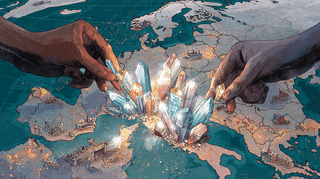
Japan pulled rare earth mud from 6,000m down in February 2026, but the 'Rare Metal King' Shigeo Nakamura says don't commercialize it. His counterintuitive argument: Minami-Torishima's 16 million tons is worth more as a silent deterrent co-held with the US than as a commercial mine. We unpack Nakamura's career, his 'don't mine, but keep the capacity' thesis, and how it compares to the US SPR, Project Vault, and Chinese stockpile strategy.
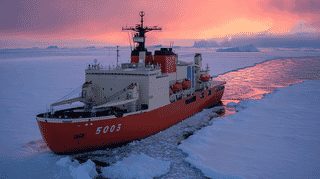
Japan plans to transfer operation of its next Antarctic icebreaker from the Maritime Self-Defense Force to research agency JAMSTEC after the current Shirase retires around 2034. A look at Japan's 70-year Antarctic legacy and what the shift means.
At the G7 finance ministers' expanded meeting on April 17, 2026 in Washington, members aligned on strengthening critical mineral supply chains. Japan committed $20M each to the Asian and Inter-American Development Banks, marking a pivot to the resource-country funding phase. From the Japan-EU BRT proposal to the Kananaskis CMAP, C$6.4B (~US$4.6B) in unlocked projects, and now MDB funding, progress is real. But China still processes 90% of rare earths. A sober assessment of whether 'slow but steady' is actually fast enough.
In spring 2026, Japan and the United States began building a three-layered rare earth alliance: Treasury Secretary Bessent's May visit, Mitsubishi Materials' stake in US recycler ReElement, and Proterial's breakthrough heavy-rare-earth-free magnet. Here is what this quiet realignment means for the global critical minerals map.
The Hormuz Strait blockade has cut off Japan's naphtha supply, forcing TOTO to halt bathtub orders and LIXIL to declare delivery dates unknown. Insulation up 40%, paint up 80%, pipes up 20%; housing materials are skyrocketing across the board. We analyze Japan's structural vulnerability of depending on the Middle East for 90% of its crude oil, with comparative data from other countries.
Nine months after the Japan-EU BRT proposal, the rare earth landscape has transformed: 55-nation pricing agreements, an EU center modeled on Japan's JOGMEC, and $1.3B US funding. But can the West truly break China's grip?
China's carrier Liaoning conducted flight operations near Minamitorishima — Japan's remote rare earth island. With Beijing tightening export controls in retaliation for PM Takaichi's Taiwan remarks, and a US-Japan rare earth partnership signed at the March 2026 summit, this is no longer just about minerals. It's a geopolitical power game with South China Sea parallels.
Microplastic pollution isn't limited to oceans — it's now raining down on forests too. A TU Darmstadt study first proved that airborne plastics settle on tree canopies and accumulate in forest soil. With 67% of Japan covered in forests, the implications are enormous. Japanese researchers have also pioneered breakthroughs in understanding how trees trap airborne microplastics.