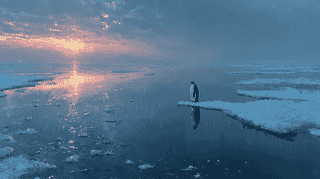
Eleven days, 44 countries, 400 delegates. We score the five expectations from our pre-meeting article against the MOFA outcome communique: emperor penguin protection blocked, tourism rules deferred, Annex VI stalled, only the transparency resolution delivered.
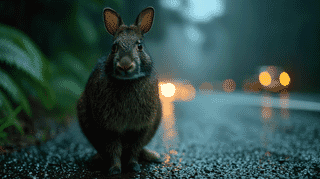
Roadkill of the Amami black rabbit, a 'living fossil' found only on two southern Japanese islands, hit a record 185 in 2025. The grim milestone is a side effect of Japan's celebrated invasive-species eradication programs, including a 24-year mongoose campaign declared complete in 2024.
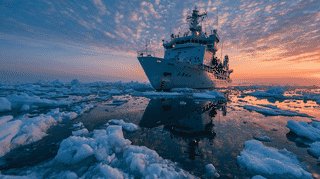
A Japanese research team from the University of Tokyo, JAMSTEC, and the National Institute of Polar Research has produced the first direct observational evidence that warm-water microbes carried into the Arctic Ocean are altering its nitrogen and phosphorus cycles. Aboard the R/V Mirai between 2015 and 2020, they tracked how UCYN-A2, a nitrogen-fixing organism normally associated with subtropical seas, surged into the Arctic basin during the early ice-melt year of 2017, and why that matters for the world's most rapidly warming ocean.
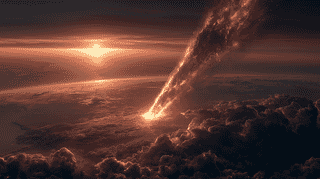
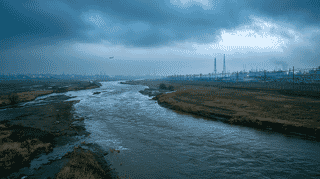
For forty years a black clay layer in a remote Hokkaido stream was East Asia's only K-Pg boundary. In May 2026, a Tohoku University-led team reported it isn't the boundary at all, and that the real record lies about four kilometers northeast.
Yamada Suisan and Japan's fisheries research agency put fully farmed eel on public sale for the first time on May 29. After cutting glass-eel production cost from 40,000 to 1,800 yen, the country aims to end wild-juvenile dependence by 2050.
Brazilian Foreign Minister Mauro Vieira visited Japan on May 17–19 for the inaugural Japan-Brazil Foreign Ministers' Strategic Dialogue. Here's what oil-dependent Tokyo wants from South America's resource giant amid the Hormuz crisis.
On May 17, 2026, Empress Masako waved goodbye to a polar bear at Tobe Zoo in Ehime, telling her 'I hate to leave.' Meet Peace, the 26-year-old 'miracle bear' who became Japan's first successful hand-raised polar bear, and the keeper who took her home to live with his family.
Japan's Environment Ministry confirmed PFAS contamination above national limits at 629 sites across 26 prefectures in fiscal 2024, including locations near U.S. military bases, factories, and Self-Defense Force facilities. A UN special rapporteur has voiced 'most serious concern,' while Japan's standards lag far behind those of the U.S. and EU.
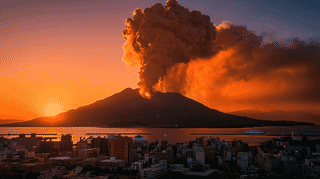
Two Japanese volcanoes are on heightened alert at the same time. Sakurajima produced its first pyroclastic flow since 2018 on May 8, while Mount Meakan in Hokkaido recorded 254 volcanic quakes in 24 hours. Here's what tourists need to know about nearby destinations, alert levels, and trustworthy sources
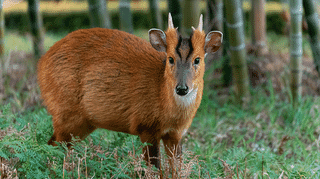
A Reeves's muntjac was sighted in Sakai, Ibaraki Prefecture in late April, the first confirmed sighting in two years and five months. Under Ibaraki's first-of-its-kind ¥2,000 bounty program for citizen-submitted photos, this should have been the first qualifying case. Why is Japan offering cash for sightings of a cute, dog-sized deer? We unpack the agricultural damage, the SFTS tick-borne disease angle, the unsettling lessons from Britain, and what happens if the front line in Ibaraki fails.