A fresh 150-billion-yen government injection pushes the state's share of Rapidus's capital to roughly 60%. Yet Tokyo capped its voting rights at 11.5%, keeping the firm out of state-enterprise territory by design. We unpack subsidies versus equity, the fate of the 2nm skeptics, and the question of who will actually buy the chips.
METI has unveiled Japan's first post-Fukushima numeric target for replacing nuclear reactors: up to 5 by the 2040s, 14 by the 2050s. Behind the decarbonization, energy-security and AI-demand drivers lies a harder question: regulatory capture, the Nuclear Village, and whether the regulator can be trusted.
Ibaraki has become the first prefecture in Japan to pay residents a cash reward for reporting illegal foreign employment. Inside the design, the governor's defense, the backlash from lawyers, and the farming-economy contradiction underneath it all.
Japan's PM Takaichi wants to scrap food consumption tax for two years, but POS vendors say the register overhaul takes a year. Why does changing a number take so long? We compare Japan's tangled POS systems with the US, where a tax change takes an afternoon. The twist: America's speed is a side effect of its chaotic tax code.
Japan's government and three megabanks gained access to a frontier AI model for cyber defense, with the digital minister calling to expand it to critical infrastructure. Set against the new US executive order and the EU AI Act, here is how Tokyo's approach differs.
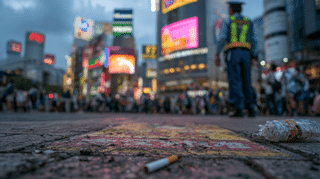
On June 1, Shibuya became the first of Tokyo's 23 wards to fine street littering on the spot, 2,000 yen a pop, with 10 penalties on day one. But this is a country that spent decades removing its public bins. Inside Japan's awkward don't-litter-but-good-luck-finding-a-bin paradox.
An unpermitted mosque facing removal in Japan exposes the real problem: the issue isn't faith, it's the permit, and the lawful route to building one is often blocked. A look at Japan's rising Muslim population, its population decline, and the legal path that was never built.
Japan's 2025 census preliminary count puts the population at 123 million, down 3.1 million in five years, the steepest drop since records began. The country fell from 11th to 12th in the world, overtaken by Ethiopia. We translate that number into cities you can picture, then compare how South Korea, Italy, and China face the same cliff, and ask whether Japan's immigration, birth-support, and regional-revival policies are working.
China overtook Japan in net external assets at the end of 2025, dropping it to third place, yet Japan's holdings hit a record high. Here is what the numbers really mean for the yen.
Tokyo's tree canopy fell from 9.2 percent in 2013 to 7.3 percent in 2022, a 20 percent drop in nine years, and Japan has roughly 500,000 fewer street trees than at its peak. As Singapore, Paris and New York expand their canopies, why do Japanese cities keep losing shade? A look through public data and recent research.
At the APEC trade ministers meeting in Suzhou, China, Japan's industry minister demanded that exporting countries rectify arbitrary rare earth curbs. A look at the slow squeeze on Japan, its roots in a Taiwan remark, and Tokyo's exit strategy.