PM Takaichi met BOJ Governor Ueda on May 22 and asked the central bank to carry out 'appropriate policy.' We explain Japan's central bank independence next to the US Fed and the ECB, and how a weak yen near 159 and the carry trade tie this to global markets.
OpenAI is moving to offer its newest cyber-focused AI model, GPT-5.5 Cyber, to the Japanese government and industry. Former NSA Director Paul Nakasone, now an OpenAI board member, flew to Tokyo to pitch critical-infrastructure cooperation. We unpack the contrast with Anthropic's tightly controlled Claude Mythos, the China-threat framing, and what it means that OpenAI wants Japan as its first international partner.
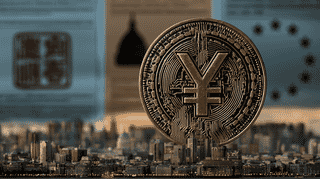
On May 19, Japan's ruling LDP unveiled a policy proposal calling for stablecoins and tokenized deposits to be treated as national financial infrastructure — and added to PM Takaichi's Big-Boned Policy in June. We compare Japan's approach with the Web3 hubs of Singapore, Hong Kong and the UAE.
On May 16, 2026, BOJ Deputy Governor Ryozo Himino delivered a keynote on the 'singleness of money' at the Japan Society of Monetary Economics. Beyond the binary of US-style stablecoin policy and a digital euro, the BOJ is quietly exploring a third path built on tokenized deposits and tokenized central bank reserves on blockchain.
NEC has completed the East Micronesia Cable System (EMCS), a 2,250-kilometer optical submarine cable that gives three Pacific island nations their first-ever fiber connectivity. For Tarawa, Nauru, and Kosrae, roughly 100,000 people who had only known the 600-millisecond delay of satellite internet, the upgrade is transformative. The backstory is equally striking: in 2018, China's HMN Tech (formerly Huawei Marine) underbid NEC and Alcatel Submarine Networks by more than 20%. A 2020 US diplomatic warning to Micronesia, the World Bank's withdrawal, and a 2021 Japan-US-Australia rescue plan rewrote the project. Five years later, the cable is in the water.
Brazilian Foreign Minister Mauro Vieira visited Japan on May 17–19 for the inaugural Japan-Brazil Foreign Ministers' Strategic Dialogue. Here's what oil-dependent Tokyo wants from South America's resource giant amid the Hormuz crisis.
On May 18, 2026, the full content of Japan's LDP proposal for revising its three security documents was revealed. Early deployment of interceptor drones, sustained warfighting capability lasting 'at least a year,' early-warning drones over the Pacific, next-generation submarines with long-range missiles: here's what Japan's future defense posture looks like, shaped by Ukraine war lessons and China deterrence.
Kawasaki Heavy Industries has begun pitching a technology that produces naphtha, the building block of plastics, from hydrogen instead of crude oil. Built on its commercial gas-to-gasoline plant in Turkmenistan, the proposal lands in the middle of a Japanese petrochemical crisis triggered by the Strait of Hormuz disruption.
Japan's Environment Ministry confirmed PFAS contamination above national limits at 629 sites across 26 prefectures in fiscal 2024, including locations near U.S. military bases, factories, and Self-Defense Force facilities. A UN special rapporteur has voiced 'most serious concern,' while Japan's standards lag far behind those of the U.S. and EU.
Researchers at Kyoto University used Japan's near-total medical insurance database to trace esotropia (inward-turning eyes) cases from 2014 to 2019, the years smartphones swept the country. Incidence rose from 32.26 to 36.61 per 100,000 person-years; surgeries climbed from 3,061 to 3,743. The link with smartphone penetration is strong, the absolute rise is small.