Japan's Digital Agency open-sourced 'Gennai', its in-house government generative AI environment, under commercial-use licenses. With a 180,000-employee rollout planned for FY2026, we compare Japan's build-then-open approach with the US GSA's USAi platform, the UK's Humphrey suite, and the EU AI Act framework.
Japan's government blocked Korean PE firm MBK Partners' $1.7 billion takeover of Makino Milling Machine, the first-ever stop order under the revised FEFTA since 2017. Why did a non-classified machine tool maker trigger national security alarms? We break down both sides of the overreach-versus-reasonable debate.
Japan's gasoline has hit record highs, dialysis tubing is running out, and bathtubs can't be shipped. With 95% of crude oil coming from the Middle East, pivoting to the world's largest oil producer, America, seems like a perfect Win-Win. But refinery design, tanker size, the Panama Canal bottleneck, and an ironic naphtha yield problem all stand in the way. Here's why the obvious solution isn't simple.
Japan has reduced dog and cat euthanasia by 99% over 50 years, yet 6,830 animals are still put down annually. Tokyo-based Signal Talk has launched 'Paw Me,' a service that lets users feed shelter animals remotely via smartphone. A new model of social participation for those who cannot keep pets due to allergies, age, or living situation.
JISDA (Japan Integrated Security Design Agency) has launched the Shiraha, a wooden fixed-wing drone costing just 70,000 yen (about 440 USD). Built on three years of field research within 20 km of Ukraine's front line, it targets Japan's training-attrition gap. How it differs from AirKamuy's cardboard drone and why Japan's defense mindset is finally shifting.
On April 21, 2026, Japan's Takaichi cabinet revised the Three Principles on Defense Equipment Transfer, officially allowing exports of lethal weapons including warships and missiles. A deep dive into what Japan's 'pacifist nation' turning point actually means.
Japan's Ministry of the Environment reports total waste of 38.11 million tons for FY2024 (down 2.2% YoY) with a recycling rate of just 19.3%. Why is Japan, famous for its cleanliness, so far behind Germany (67%) and South Korea (60%)? A look inside the world's most incineration-dependent waste system.
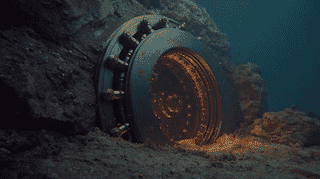
Japan pulled rare earth mud from 6,000m down in February 2026, but the 'Rare Metal King' Shigeo Nakamura says don't commercialize it. His counterintuitive argument: Minami-Torishima's 16 million tons is worth more as a silent deterrent co-held with the US than as a commercial mine. We unpack Nakamura's career, his 'don't mine, but keep the capacity' thesis, and how it compares to the US SPR, Project Vault, and Chinese stockpile strategy.
A 2-year-old Pomeranian named Haku joined Japan's Miyazaki Prefectural Police as their first Pomeranian K-9. After being surrendered by his original owner, he passed a tough scent test in his very first year. Discover his trainer's story, Japan's growing small-breed police dog trend, and what makes Haku special. What unusual working dogs exist in your country?
Japan plans to transfer operation of its next Antarctic icebreaker from the Maritime Self-Defense Force to research agency JAMSTEC after the current Shirase retires around 2034. A look at Japan's 70-year Antarctic legacy and what the shift means.
At the G7 finance ministers' expanded meeting on April 17, 2026 in Washington, members aligned on strengthening critical mineral supply chains. Japan committed $20M each to the Asian and Inter-American Development Banks, marking a pivot to the resource-country funding phase. From the Japan-EU BRT proposal to the Kananaskis CMAP, C$6.4B (~US$4.6B) in unlocked projects, and now MDB funding, progress is real. But China still processes 90% of rare earths. A sober assessment of whether 'slow but steady' is actually fast enough.