Japan and Australia signed the New FFM joint development contract, worth up to AUD 20 billion. We unpack the quasi-alliance behind this de facto warship export, and the Takaichi government's push to scrap the 'Five Categories' and allow lethal weapon exports.
Japan's Foreign Minister Toshimitsu Motegi publicly criticized the White House at an April 17 Diet session over its use of Nintendo's Wii Sports footage in an Iran strike propaganda video. As Nintendo already sues the US over tariffs, here's how Japanese IP ended up at the center of a diplomatic spat, and how Reddit is reacting.
Japan's National Intelligence Council Bill marks the country's biggest postwar intelligence reform. But similar PM-led intelligence bodies overseas have produced both spectacular successes (foiling the 2006 transatlantic bombing plot) and deep abuses: Korea's KCIA election interference, NSA mass surveillance, GCHQ's legal loopholes, BND monitoring German politicians for the NSA. What lessons should Tokyo draw?
Tokyo District Court sentenced a website operator to 18 months suspended prison plus 1 million yen fine for posting spoiler articles about Godzilla Minus One. We examine the landmark ruling that text alone can constitute film adaptation, Japan's key copyright precedents including the Esashi Oiwake case and Fast Movie lawsuits, and Japan's overall stance on creator protection.
Food tech is one of 17 pillars in Japan's new national growth strategy under the Takaichi administration, with a 30% global market share target by 2040. Beyond the obvious giants like Maruha Nichiro, Nissin, and Kikkoman, this deep dive spotlights 5 lesser-known but high-potential players: Regional Fish (gene-edited seafood), FRD Japan (closed-loop salmon), Chitose Bio Evolution (algae unicorn), UMITRON (aquaculture AI), and Oishii Farm (NY strawberry factory).
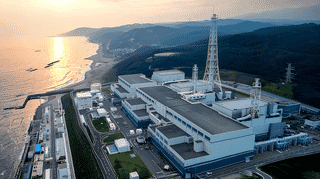
On April 16, 2026, TEPCO's Kashiwazaki-Kariwa Unit 6 resumed commercial operation for the first time in 14 years, the first post-Fukushima restart for the utility responsible for the 2011 disaster. With Middle East tensions squeezing LNG supply, electricity prices climbing, and 2050 carbon neutrality targets looming, Japan's energy policy has reached an inflection point. A deep dive into the restart's context, comparisons with Germany, France, and South Korea, the 'enclave mega-solar' scandal denting renewables, and how ordinary Japanese people are actually reacting.
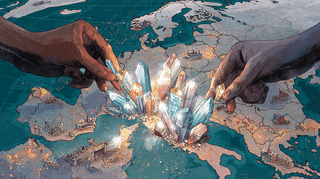
In spring 2026, Japan and the United States began building a three-layered rare earth alliance: Treasury Secretary Bessent's May visit, Mitsubishi Materials' stake in US recycler ReElement, and Proterial's breakthrough heavy-rare-earth-free magnet. Here is what this quiet realignment means for the global critical minerals map.
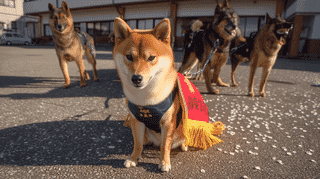
Gifu Prefecture's first Shiba Inu police dog, 2-year-old Tsubu, passed a rigorous scent test to join the K-9 force alongside German Shepherds. Explore her story, the rise of small-breed police dogs in Japan, Japanese dog breeds, and where to meet Shibas. What unconventional working dogs exist in your country?
The Hormuz Strait blockade has cut off Japan's naphtha supply, forcing TOTO to halt bathtub orders and LIXIL to declare delivery dates unknown. Insulation up 40%, paint up 80%, pipes up 20%; housing materials are skyrocketing across the board. We analyze Japan's structural vulnerability of depending on the Middle East for 90% of its crude oil, with comparative data from other countries.
Japan's Economy Minister Akazawa was reprimanded by PM Takaichi and Finance Minister Katayama for suggesting BOJ rate hikes as a policy option on national TV. We explain why this crossed Japan's central bank independence red line, amid surging oil prices, a weak yen at 159, and the upcoming April 27-28 BOJ meeting.
Nine months after the Japan-EU BRT proposal, the rare earth landscape has transformed: 55-nation pricing agreements, an EU center modeled on Japan's JOGMEC, and $1.3B US funding. But can the West truly break China's grip?