An in-depth look at Japan's Hydrogen Arterial Plan (Suiso Daidomyaku Koso), unveiled by METI in April 2026. Six priority regions connected by arterial highways will receive concentrated investment of 15 trillion yen by 2040, with Toyota and Chiyoda starting mass production of electrolyzers in 2029. How Japan's strategy compares with the US IRA and the EU Hydrogen Bank.
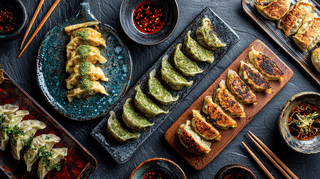
Osaka Ohsho, the 56-year-old Japanese gyoza chain, opens its first North American flagship in Sawtelle (Little Osaka), Los Angeles, on May 8, 2026. We unpack the Mitsubishi Shokuhin joint venture, the SNS-driven distribution strategy, the tableside cooking spectacle, and how the brand plans to flip gyoza from a ramen side dish into a main attraction.
On April 28, 2026, the day Denso formally withdrew its acquisition proposal for Rohm, Mitsubishi Electric CEO Kei Uruma declared he wants to spin off only the power semiconductor businesses of all three companies and form a joint venture. This proposes a different framework from Rohm and Toshiba's full semiconductor integration plan, adding a new wrinkle to the world No.2 alliance vision. We analyze competition with Wolfspeed, Infineon, and STMicroelectronics, the SiC market share battle, and the impact on the EV industry.
On April 27, 2026, SEGA signed an MOU with Thailand's largest conglomerate, the C.P. Group, to jointly develop entertainment business across ASEAN. With Sonic and Angry Birds at the core, the deal targets a $14B+ Southeast Asian gaming market. We unpack who the CP Group is, what SEGA stands to gain, and the real risks behind Japanese gaming's biggest ASEAN bet yet.
After 62 days stranded in the Persian Gulf, Japan's VLCC Idemitsu Maru passed through the Strait of Hormuz on April 28, without paying Iran's transit toll. The story echoes the 1953 Nissho Maru incident that forged a unique bond between Japan and Iran.
Oriental Land Company, operator of Tokyo Disney Resort, posted record revenue of 704.5 billion yen ($4.4 billion) for fiscal 2026, yet operating profit fell, and the stock has been cut nearly in half since 2023, hitting a fresh year-low days before the earnings release. Here is what is making investors nervous about the 'house of mouse' in Japan, from shrinking margins and demographic headwinds to a 330 billion yen cruise gamble.
Fujitsu is doubling down on its sovereign AI strategy with the FUJITSU-MONAKA CPU series, choosing Rapidus as a manufacturing partner and 'coexisting' with NVIDIA's GPUs rather than competing. We compare Japan's hybrid approach to China's fully autonomous Loongson (LoongArch) and Europe's Arm-based SiPearl, revealing how Japan's pragmatic balance defines a third path in global chip sovereignty.
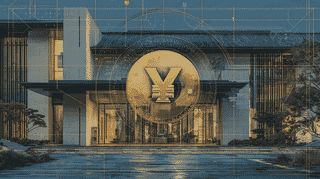
Japan's Financial Services Agency has, for the first time, formally identified JPYC as a registered Funds Transfer Business in an official document. We unpack the architecture of Japan's stablecoin regulation, contrast it with the US GENIUS Act and EU MiCA, clarify the legal distinction from PayPay-style e-money, and examine what it means for global payment infrastructure.
The Bank of Japan held its policy rate at 0.75% on April 28, 2026 by a 6-3 vote, with three dissenters proposing a hike to 1.0%, a first under Governor Ueda. We unpack Ueda's press conference, allegations of pressure from the Takaichi administration, the sharp upward revision in inflation forecasts, the immediate market reaction, and the divergence between domestic and international assessments.
Nissan revised its FY2026 operating outlook from a 60-billion-yen loss to a 50-billion-yen profit. The 110-billion-yen swing reflects cost cuts, yen weakness, and a one-off provision reversal tied to the US repealing its greenhouse-gas vehicle rule. Net loss still expected at 550 billion yen for a second straight year of red ink.
Tokyo Gas raises its monthly base fee by ¥150 ($0.94) starting October, the first hike since 1980. But in Japan, many are reacting with 'isn't 46 years of NO change the weird part?' A look at how Japan compares to US, UK, and Sweden gas bills, what yen weakness and LNG imports mean, and why this signals the end of Japan's deflation era.