Nidec's third-party committee finalized its probe: accumulated net profit impact hit 161 billion yen (about $1 billion). Founder Shigenobu Nagamori's excessive pressure was identified as the root cause, marking a turning point for Japan's charismatic founder model. Compared with Toshiba and Olympus.
Food tech is one of 17 pillars in Japan's new national growth strategy under the Takaichi administration, with a 30% global market share target by 2040. Beyond the obvious giants like Maruha Nichiro, Nissin, and Kikkoman, this deep dive spotlights 5 lesser-known but high-potential players: Regional Fish (gene-edited seafood), FRD Japan (closed-loop salmon), Chitose Bio Evolution (algae unicorn), UMITRON (aquaculture AI), and Oishii Farm (NY strawberry factory).
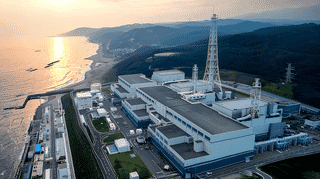
On April 16, 2026, TEPCO's Kashiwazaki-Kariwa Unit 6 resumed commercial operation for the first time in 14 years, the first post-Fukushima restart for the utility responsible for the 2011 disaster. With Middle East tensions squeezing LNG supply, electricity prices climbing, and 2050 carbon neutrality targets looming, Japan's energy policy has reached an inflection point. A deep dive into the restart's context, comparisons with Germany, France, and South Korea, the 'enclave mega-solar' scandal denting renewables, and how ordinary Japanese people are actually reacting.
BlackRock, managing $14 trillion in assets, has taken a 5.28% stake in Komeda Holdings, the Nagoya-born coffee chain. Even in the AI era, people don't stop drinking coffee. We unpack why the world's largest asset manager is betting on Japan's food industry, looking at Komeda's unique franchise model and its global expansion story.
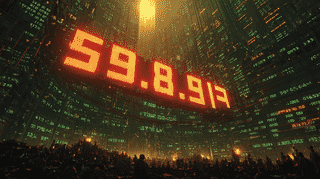
On April 16, 2026, the Nikkei 225 closed at an all-time high of 59,518, up 1,384 points. We break down the structural drivers: US-Iran peace hopes, S&P 500 crossing 7,000, BOJ April rate-hike odds collapsing from 55% to 30% after Finance Minister Katayama's rebuke, USD/JPY at 158, and a 16.5% surge from end-March. Plus the simultaneous rally in tech and regional bank stocks, DAX comparison, and the April foreign-flow anomaly.
Alpaca, founded by two Japanese entrepreneurs in Silicon Valley, hit a $1.15 billion valuation in its Series D round, becoming the first Japanese-founded US unicorn. Serving SBI Securities, Kraken, and 300+ institutions across 40 countries, it aims to be the 'AWS of finance', alongside Plaid and Stripe. Why did they build this in America, not Japan?
Tokyo-based Orbray has produced the world's largest 30mm square (111) freestanding diamond single-crystal substrate, leaping from the previous few-millimeter limit. The twin-suppression breakthrough, published in Applied Physics Express, unlocks NV-center quantum sensors and next-generation power semiconductors.
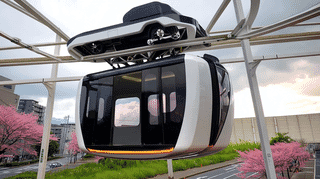
Zippar, a self-propelled urban ropeway developed by Fukushima-based startup Zip Infrastructure, can run every 12 seconds and navigate curves. At 1/20 the cost of subway and 1/5 of monorail construction, it could rescue Japanese cities facing a bus driver shortage.
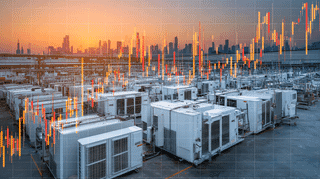
Elliott Investment Management has poured over $1 billion into Daikin Industries, the world's largest HVAC maker, demanding margin improvements, ¥150 billion in annual buybacks, and a portfolio overhaul. Unlike Elliott's usual Japan targets rich in real estate and cross-shareholdings, Daikin marks a strategic pivot toward operational activism, fueled by HVAC sector expertise gained from Johnson Controls.
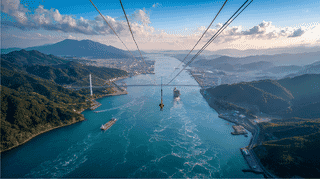
A 1,740m zipline across Japan's Kanmon Strait stalled for 2 years over funding, but Shimonoseki has restarted with a new feasibility study. The mayor declared he won't give up on this $9.4M project to fly riders at 110 km/h over samurai battlegrounds.
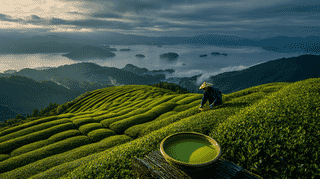
The global matcha boom has reached even Kagawa, Japan's smallest prefecture famous for udon noodles. With a $31,000 research budget, Kagawa is exploring tencha production as green tea exports hit $450 million. Here's why the matcha gold rush now spans the entire country.