Suntory Holdings is acquiring Daiichi Sankyo Healthcare, maker of Loxonin, Lulu, and Minon, for $1.55 billion. As Japan's youth abandon alcohol and the population ages rapidly, the beverage giant pivots to self-care. We analyze the deal, the booming OTC market, and what it means for global healthcare trends.
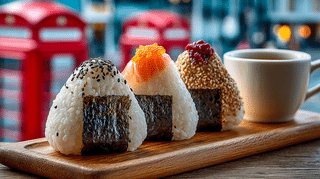
JR East, Japan's largest railway group, opened onigiri shop TOKYO ONIGIRI in London's Leicester Square in December 2025. Behind this unusual move, a railway company entering overseas food retail, lies the government's GOHAN Project strategy to boost Japanese rice exports. From Onigiri Summit 2026 to convenience store packaging innovations, we explore how the humble rice ball could become Japan's next global food hit after sushi and ramen.
Japan's FSA plans to let ordinary companies set up simplified insurance subsidiaries that co-insure with major carriers. Born from post-scandal industry reform, the move could reshape a market long dominated by three mega-insurers, and open the door to embedded insurance and fintech innovation.
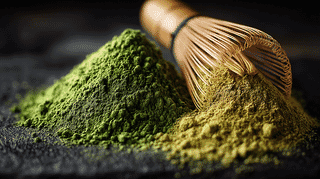
Japan's green tea exports doubled to ¥72.1 billion in 2025, yet domestic matcha production can't keep up. As tea plantations shrink 29% in a decade and low-grade powdered tea floods global markets, the industry warns of 'matcha laundering.' Is the matcha in your latte the real thing?
EssilorLuxottica has raised its Nikon stake to 19.61%, nearing the 20% regulatory cap. We analyze the strategic implications for smart glasses technology, Japan's national security screening process, and why foreign investors—from Buffett to European giants—are pouring money into Japan Inc.
Nine months after the Japan-EU BRT proposal, the rare earth landscape has transformed: 55-nation pricing agreements, an EU center modeled on Japan's JOGMEC, and $1.3B US funding. But can the West truly break China's grip?
On April 13, 2026, Japan's 10-year government bond yield surged to 2.490%, surpassing the 1998 'Trust Fund Bureau Shock' level for a 27-year high. BOJ Governor Ueda warned of Middle East geopolitical risks at the Trust Convention. All eyes are on the April 27-28 policy meeting.
Tokyo deep-tech startup H.I.Council has performed the world's first 108-qubit FeMoCo calculation on IBM's Heron r2 processor. While achieving chemical accuracy via classical methods, the team discovered a quantitative hardware limit they call the 'coherence wall' — a constructive finding for quantum hardware development.
Honda faces its first-ever annual loss since going public in 1957, with up to $15.7 billion in EV-related write-downs. Three flagship EVs cancelled, Sony-Honda AFEELA scrapped, and China sales declining for 25 straight months. We break down the crisis, analyze Honda's hybrid pivot and May 2026 strategy reveal, and share Japanese and global reactions.
SoftBank, NEC, Honda, and Sony have established a new company to develop Japan's own AI foundation model, backed by $6.3 billion in government support over five years. Instead of competing head-on with US and Chinese tech giants in general-purpose AI, Japan is betting on 'Physical AI', AI that controls robots and factory equipment using the country's deep manufacturing expertise.
Japan's METI officially approved an additional $4 billion for Rapidus, bringing total government support to $15 billion. We analyze Japan's 2nm chip ambitions alongside the US CHIPS Act, EU Chips Act, TSMC's Kumamoto expansion, and the critical challenge of finding customers.